United Kingdom: A Complete Guide to the Land of Fog and Tradition
United Kingdom, England or Britain — what's the difference: we break down the geography, history and traditions of the island nation in simple terms.

The United Kingdom is one of the most influential countries in the modern world, the birthplace of parliamentary democracy and the cradle of the industrial revolution. This island nation in the North Atlantic attracts millions of tourists with its ancient castles, misty landscapes and rich traditions. But what exactly does modern Britain represent, and how does it relate to England or Britain itself?
United Kingdom, England or Britain — what's the difference
Many people confuse the terms "United Kingdom," "England" and "Britain," using them as synonyms. In fact, there are important distinctions between these terms.
Great Britain is a geographical term for the largest island of the British Isles. The island of Great Britain includes three historic countries: England, Scotland and Wales.
England is the largest and most populous part of the island, occupying the southern and central territories. It was England that long dominated the political union of British lands.
The United Kingdom of Great Britain and Northern Ireland is the official name of the modern state. This sovereign country includes the island of Great Britain plus Northern Ireland, located on the island of Ireland.
The British Isles is an archipelago that includes the island of Great Britain, the island of Ireland and many smaller islands and archipelagos, including the Orkney Islands.
The term "Britain" is often used as a short name for the entire Kingdom, although technically it refers only to the island of Great Britain.
Geography and climate of the United Kingdom
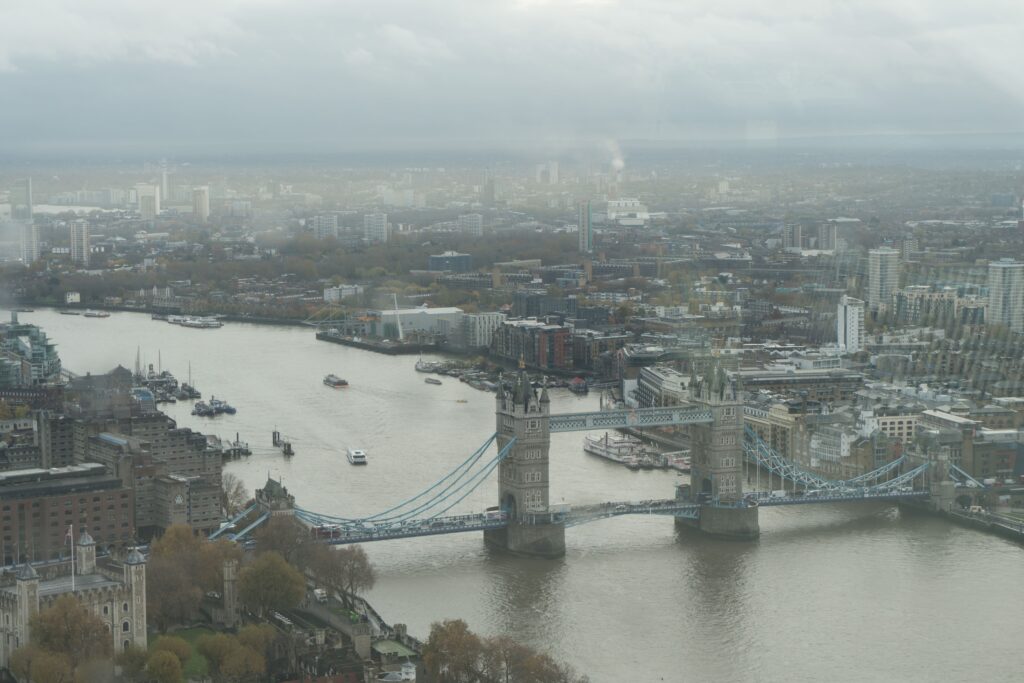
The United Kingdom is located on the British Isles off the northwestern coast of continental Europe. The country is washed by the Atlantic Ocean from the west and the North Sea from the east. The English Channel separates Great Britain from continental Europe.
The country's area is approximately 244,000 km². The island itself stretches 966 km from north to south and 483 km from west to east at its widest point.
The country is dominated by mountainous terrain in the northern and western regions, especially in Scotland and Wales. England is characterized by plains and hills. The highest point in Great Britain is Ben Nevis in Scotland (1,345 m).
Major rivers include the Thames in England, which flows through London, and many shorter rivers in mountainous regions. Scotland is home to the famous Loch Ness.
The climate of the United Kingdom is temperate oceanic, characterized by mild winters and cool summers. The island is influenced by the warm Gulf Stream, which ensures relatively mild temperatures for such a northern latitude. Frequent rains and fogs earned the country the reputation of the "misty Albion."
History of the formation of the United Kingdom
The history of modern Britain is a story of the gradual unification of four historic countries under a single crown.
In ancient times the island was inhabited by Celtic tribes, then conquered by Romans, Anglo-Saxons and Normans. Each wave of conquests left its mark on culture and language.
England as a centralized kingdom was formed by the 10th century. Wales was incorporated into England in the 13th-16th centuries. Scotland remained an independent kingdom until 1707.
A key moment was the Act of Union in 1707, which united England and Scotland into a single Kingdom of Great Britain. In 1801, Ireland joined the union, creating the United Kingdom of Great Britain and Ireland.
The 18th-19th centuries were the era of the British Empire's golden age. Great Britain became the "mistress of the seas," controlling trade routes and building an empire "on which the sun never sets." The Industrial Revolution began in Great Britain, transforming the country into the "workshop of the world."
After World War I, most of Ireland gained independence (1922), and the state became known as the United Kingdom of Great Britain and Northern Ireland.
Administrative structure and composition of the country
The Kingdom consists of four historic countries: England, Scotland, Wales and Northern Ireland. Each has its own capital: London in England, Edinburgh in Scotland, Cardiff in Wales and Belfast in Northern Ireland.
London is not only the capital of England but also the capital of the entire United Kingdom. Greater London is a separate administrative unit with a population of over 9 million people.
In recent decades, a process of devolution has taken place — the transfer of some powers from central government to regional parliaments and assemblies. Scotland and Wales gained their own parliaments, Northern Ireland its assembly.
England is divided into counties, Scotland into regions, Wales into counties and city-counties. The local government system includes district and city councils.
Government and political system
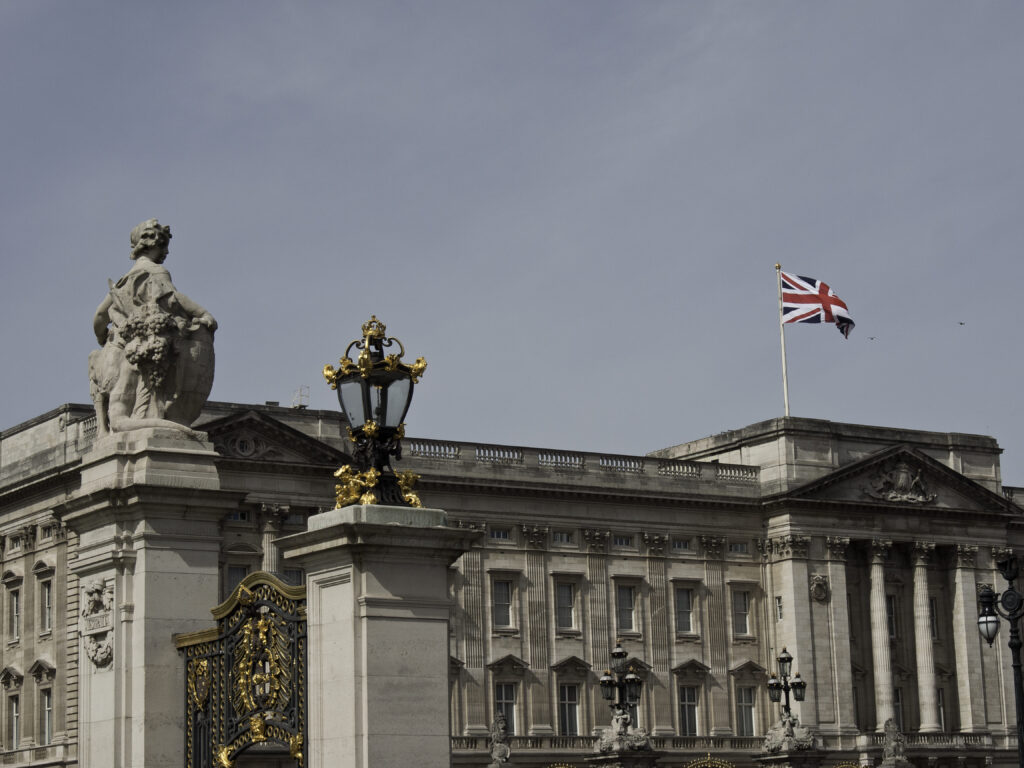
The United Kingdom is a constitutional monarchy with a parliamentary form of government. The head of state is formally the monarch (currently King Charles III), but real executive power belongs to the government headed by the Prime Minister.
The British Parliament consists of two chambers: the House of Commons (elected by the people) and the House of Lords (appointed). Parliament meets in the Palace of Westminster in London.
The government is formed by the party that wins a majority in the House of Commons. The Prime Minister traditionally resides at 10 Downing Street. The main political parties are the Conservative Party and the Labour Party.
The Kingdom does not have a written constitution in the conventional sense. The constitutional order is based on parliamentary acts, judicial precedents and constitutional conventions.
Population, languages and culture
The population of the United Kingdom is approximately 67 million people. British residents are distinguished by ethnic and cultural diversity, which is the result of centuries of migration.
The official language is English, but in Wales the Welsh language also has official status, in Scotland Scottish Gaelic and Scots are recognized. The Irish language is widespread in Northern Ireland.
The British way of life is famous worldwide for its traditions: afternoon tea, pubs, a love of gardening and football. The education system includes the world-renowned universities of Oxford and Cambridge.
The religious landscape is diverse: the Anglican Church is official in England, the Presbyterian Church in Scotland. A significant portion of the population practices Catholicism, Islam and other religions.
Economy and modern development
The United Kingdom is one of the world's largest economies with a high level of development. London remains one of the world's leading financial centers alongside New York.
The country's currency is the pound sterling, one of the world's oldest currencies. The Bank of England, founded in 1694, is the central bank.
The economy is based primarily on the service sector, including financial services, tourism and creative industries. Industry includes mechanical engineering, chemical production, and oil extraction in the North Sea.
The Kingdom is actively developing high technology and is a leader in fintech and artificial intelligence. Many international airlines use London as a transit hub.
International relations and the UK's role in the world
The United Kingdom plays an important role in international relations as a permanent member of the UN Security Council and a nuclear power. The country is a member of NATO, G7, G20 and other international organizations.
Following Brexit in 2020, the country left the European Union, which significantly changed its international position. British governments are actively developing the concept of "Global Britain," strengthening ties with former colonies within the Commonwealth of Nations.
Special relations link the United Kingdom and the USA. The country also maintains close ties with Canada, Australia and other English-speaking countries.
Facts and practical information for travelers
The United Kingdom attracts millions of tourists annually. Most foreigners need a visa to enter the country. An exception is citizens of some countries with visa-free entry for short stays.
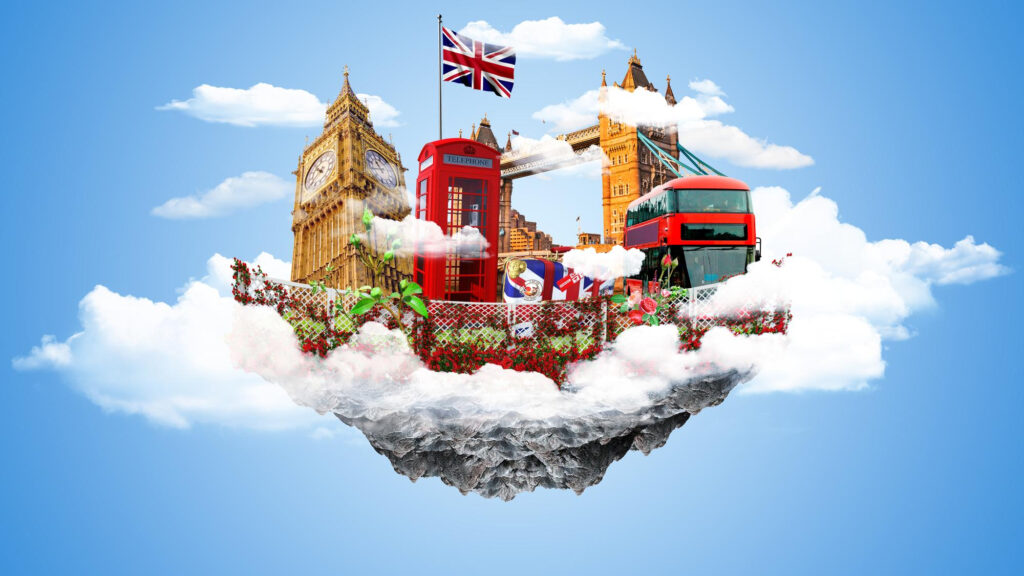
London — the capital and largest city, offers many attractions: Big Ben, Tower Bridge, Buckingham Palace. British overseas territories lie beyond the United Kingdom itself.
National transportation is well developed: railroads connect all major cities, London has one of the world's oldest metro systems. Many airlines operate domestic and international flights.
The currency is pounds sterling, which can be exchanged at banks and currency exchanges. Shops in the United Kingdom offer a wide selection of goods, with British clothing brands and premium goods being particularly popular.
The United Kingdom is a country with a rich history, unique culture and a dynamic modern economy that continues to play an important role on the world stage.
See also
Related articles

Project Eden: A Unique Botanical Garden in Cornwall

Surrey: Historic County of Great Britain
