Caribbean Islands: A Guide to the Pearl of the Atlantic
The Caribbean is an archipelago of thousands of islands between North and South America: beaches and coral reefs, culture and history.

The Caribbean Islands, also known as the Caribbean, form an extensive archipelago located in the Caribbean Sea. This Caribbean region, often called a tropical paradise, comprises more than 7,000 islands, reefs, and cays. Each island in the archipelago is unique. They stretch in an arc from the southeastern coast of North America to the northern coast of South America.
The Caribbean Basin is not merely a geographical concept but an entire region uniting islands and adjacent continental territories. It includes the Caribbean Sea, its islands (including the Antilles), and surrounding coastlines. The term "Caribbean" is often used as a synonym for the West Indies, though the latter term sometimes encompasses other territories as well.
The Significance of the Caribbean Archipelago
The significance of the Caribbean archipelago is difficult to overstate. This unique place plays an important role in several aspects:
- Natural diversity: The Caribbean is renowned for its pristine beaches, crystal-clear waters, and rich tropical flora and fauna. Here are some of the world's most beautiful coral reefs.
- Cultural heritage: It stands out for its remarkable cultural diversity, shaped by indigenous peoples, European colonizers, African slaves, and Asian immigrants.
- Historical significance: The Caribbean islands were key during the colonial era and played an important role in shaping the modern world.
- Economic influence: Today, the Caribbean is not only a popular tourist destination but also an important place in terms of international trade and finance.
- Geopolitical role: The location of the islands between North and South America makes them a strategically important region.
The Caribbean islands attract millions of travelers annually with their picturesque landscapes, rich history, unique culture, and the hospitality of local residents. However, behind this paradise façade lies a complex region with a rich past and a complicated present, facing a number of environmental, economic, and social challenges.
Geographic Location
The islands are located in the Caribbean Sea, which is part of the Atlantic Ocean. They lie to the southeast of North America, to the east of Central America, and to the north of South America.
The Caribbean Sea on the World Map
- Northern boundary: the southern coasts of Cuba and Haiti
- Southern boundary: the northern coasts of Venezuela, Colombia, and Panama
- Eastern boundary: the Lesser Antilles
- Western boundary: the mainland coast (Belize, Honduras, Nicaragua, Costa Rica)
The Caribbean Basin covers an area of approximately 2,754,000 km² (1,063,000 sq mi). It connects to the Atlantic Ocean through several passages between islands to the east and northeast, and to the Gulf of Mexico through the Yucatan Channel to the northwest. The islands surrounded by the Caribbean Sea lie between North America and the South American continent.
Key Geographic Features of the Region
Islands: Modern travelers can explore more than 7,000 islands, islets, and reefs. Each island in the Caribbean archipelago plays its own role. The islands are divided into several groups:
- The Greater Antilles (Cuba, Jamaica, Haiti, Puerto Rico)
- The Lesser Antilles (including the Virgin Islands, Guadeloupe, Martinique)
- The Bahamas
- Mainland coastal islands
Relief: Most islands in the region have mountainous terrain of volcanic origin. Some islands, particularly in the Bahamas, are low-lying coral formations.
Climate: Characterized by a tropical climate with consistently high temperatures and high humidity. Average annual temperatures range from 25°C to 29°C.
Ocean currents: The Caribbean Sea is influenced by the North Equatorial Current, which enters the sea from the east and exits to the west, forming the Gulf Stream.
Tectonic activity: The islands are located at the boundary of the Caribbean and North American tectonic plates, which explains the high seismic activity and the presence of active volcanoes on some islands in the region.
Natural zones: From mangrove thickets and tropical forests to mountain ecosystems and coral reefs, the Caribbean is distinguished by the diversity of its natural zones.
Coastline: The total length of the coastline of all the islands is approximately 50,000 km, which makes the region particularly vulnerable to rising sea levels and other consequences of climate change.
The geographic position of the islands largely determined their historical role as a strategic region for maritime trade and colonial expansion. Statistics also show their current significance as a popular tourist destination and an important transportation hub between the Americas.
The Caribbean Archipelago
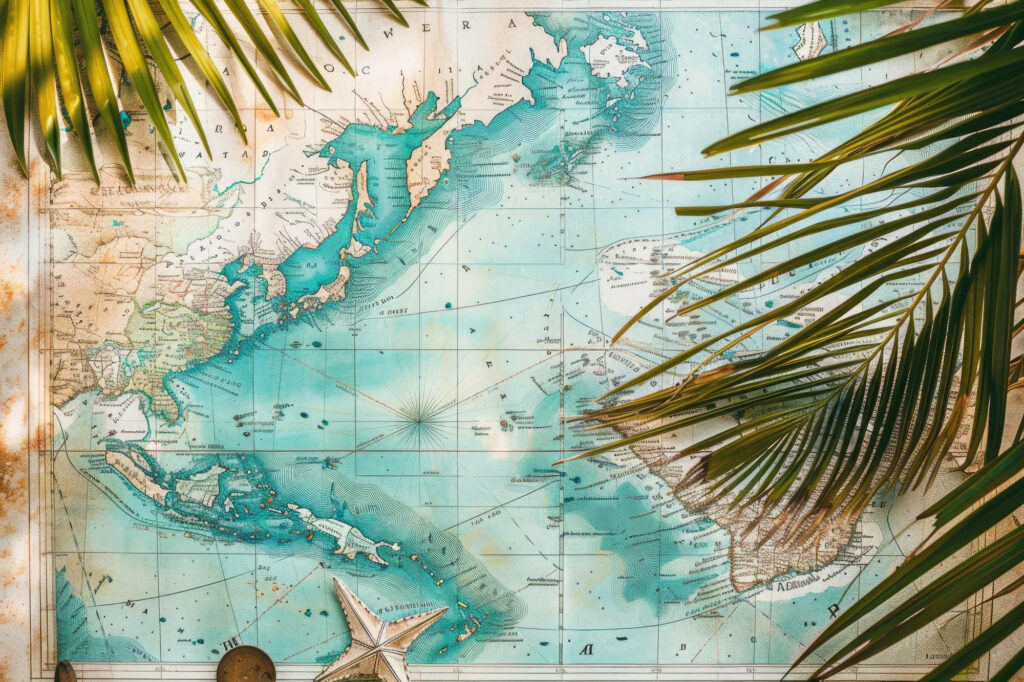
The Caribbean Archipelago is an extensive group of islands scattered across the sea. It is distinguished by the remarkable diversity of Caribbean islands, each with its own unique characteristics. Here you can find both large tropical islands and small coral formations.
Number and Types of Islands
In total, the Caribbean Sea contains more than 7,000 islands, islets, reefs, and cays.
By origin, the islands are divided into two main types:
- Volcanic islands: mountainous, with fertile soils
- Coral islands: low-lying, formed by coral reefs
The Largest Islands and Their Features
Cuba (area 109,884 km²):
- The largest island in the Caribbean Sea
- This island is known for its tobacco plantations and colonial architecture
Haiti (76,192 km²):
- The second largest island, shared between two nations: Haiti and the Dominican Republic
- The island is characterized by mountainous terrain and a rich history
Jamaica (10,991 km²):
- The third largest Caribbean island
- Famous for its beaches, reggae music, and Blue Mountain coffee
- Jamaica's beaches are considered among the best in the region
Puerto Rico (8,870 km²):
- The fourth largest island
- Known for its natural reserves and historical attractions
List of Major Islands and Island Groups
The Greater Antilles:
- Cuba, Jamaica, Haiti, Puerto Rico
The Lesser Antilles:
- *Windward Islands*: Virgin Islands, Guadeloupe, Dominica, Martinique, Saint Lucia, Saint Vincent and the Grenadines, Grenada, Antigua, Barbuda
- *Leeward Islands*: Aruba, Curaçao, Bonaire
The Bahamas:
- The Bahamas archipelago of more than 700 islands and reefs
- The island of Nevis is also part of the eastern Caribbean territories
Islands of the Caribbean Mainland Coast:
- Roatan (Honduras), Islas del Maiz (Nicaragua), San Andres, and Providencia (Colombia)
Features of the Archipelago
- Biodiversity: Each Caribbean island has a unique ecosystem with endemic species of flora and fauna
- Cultural diversity: The islands represent different cultures and languages, reflecting the complex history of the region
- Economic development: The level of economic development varies greatly from island to island
- Vulnerability to natural disasters: Many islands are subject to hurricanes, earthquakes, and volcanic activity
- Tourist appeal: Most islands are popular tourist destinations thanks to their beaches, nature, and cultural heritage
The Caribbean Archipelago is a unique region where each island has its own character and charm. Despite the common features inherent to the entire region, the diversity of natural conditions, history, and culture makes each island special and unique.
Countries and Territories of the Caribbean Basin
The Caribbean territories consist of both independent states and dependent territories. This complex political structure is a result of a long history of colonization and decolonization.
Independent States
- Antigua and Barbuda
- The Bahamas
- Barbados
- Haiti
- Grenada
- Dominica
- Dominican Republic
- Cuba
- Saint Vincent and the Grenadines
- Saint Kitts and Nevis
- Saint Lucia
- Trinidad and Tobago
- Jamaica
Some Caribbean countries, such as Antigua and Barbuda, Saint Kitts and Nevis, Grenada, and Dominica, offer programs allowing foreign buyers to obtain citizenship by investment. Antigua is famous for its beaches, while the island of Barbuda is known for its natural reserves. The island of Nevis is part of the federation of Saint Kitts and Nevis.
Dependent Territories
British:
- Anguilla
- British Virgin Islands
- Cayman Islands
- Montserrat
- Turks and Caicos
Dutch:
- Aruba
- Curaçao
- Sint Maarten (southern part of Saint Martin)
- Bonaire, Sint Eustatius, and Saba (special municipalities of the Netherlands)
French:
- Guadeloupe
- Martinique
- Saint Barthélemy
- Saint Martin (northern part of Saint Martin island)
American:
- Puerto Rico
- US Virgin Islands
Features of Political Organization
- Diversity of political systems: from socialist republic (Cuba) to constitutional monarchies (Commonwealth countries)
- Many independent states are members of the community (CARICOM), a regional organization promoting economic integration and cooperation
- Dependent territories have varying degrees of autonomy. For example, Puerto Rico is an unincorporated organized territory of the USA, while Aruba is a self-governing state within the Kingdom of the Netherlands
- Some islands are divided between different Caribbean countries. For example, the small island of Saint Martin is divided between France (Saint Martin) and the Netherlands (Sint Maarten)
Economic Features
- Most countries of the archipelago are heavily dependent on tourism and the service sector
- Some countries (e.g., the Bahamas, Cayman Islands) are major offshore financial centers
- Agriculture (in particular, sugar, banana, and coffee production) remains an important sector for many countries
- Mineral extraction (oil, natural gas) plays a significant role in the economy of Trinidad and Tobago
Cultural Features
- Official languages vary from English and French to Spanish and Dutch, reflecting the colonial past
- Creole languages are widely spoken in many countries of the archipelago
- Local culture is known for its music (reggae, calypso, salsa), carnivals, and unique cuisine
Challenges and Prospects
- Many Caribbean countries face economic difficulties, high public debt levels, and dependence on external aid
- Climate change and rising sea levels pose a serious threat to low-lying islands
- Developing sustainable tourism and diversifying the economy are key tasks for many countries in the region
A map of the Caribbean Basin with countries and capitals helps visualize the complex political structure of the region, demonstrating the diversity and proximity of different states and territories.
Nature and Climate
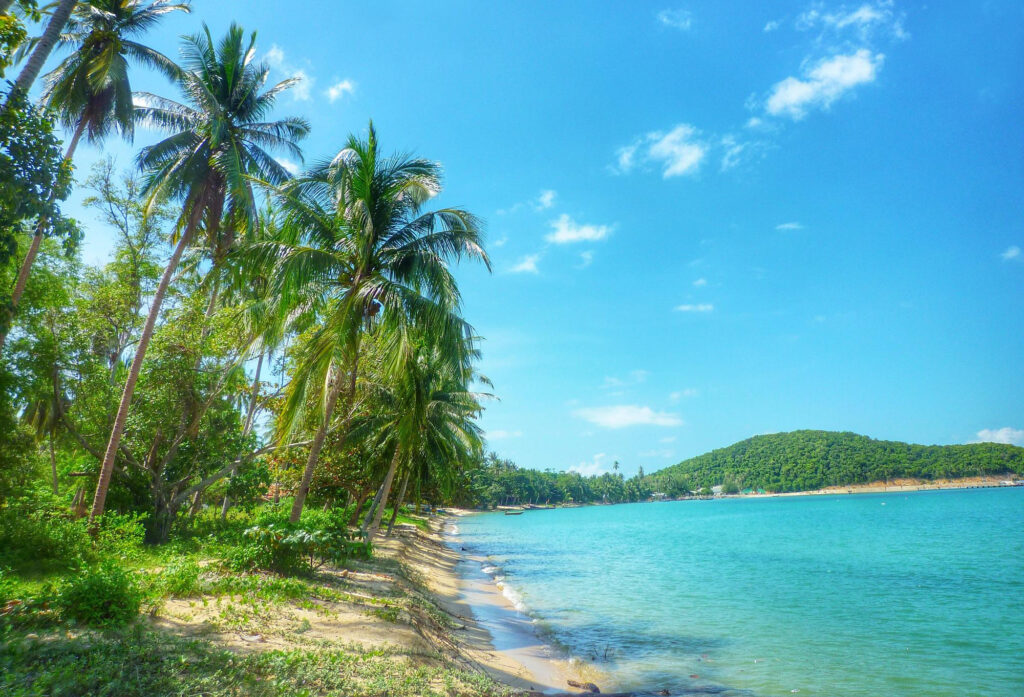
The archipelago is known for its unique nature, which largely determines its appeal to tourists and plays an important role in the lives of local residents. The tropical climate creates ideal conditions for vacationing year-round. Statistics can show constant growth in travelers' interest in the islands, who come here from all over the world to observe the unique flora and fauna.
Features of Tropical Climate
Temperature: Year-round, the temperature remains high, averaging 25–29°C. Summer air temperatures often exceed 30°C. Seasonal temperature fluctuations are minimal. The regions with the most comfortable conditions are located in the central part of the region.
Water temperature: The water is always very warm. Average monthly values range from +25°C to +28°C.
Humidity: High humidity is characteristic of most of the archipelago, especially in coastal areas.
Precipitation: The amount of precipitation varies depending on location and terrain. Two seasons are typically distinguished:
- Dry season (December to April)
- Wet season or rainy season (May to November)
Trade winds: Northeastern trade winds have a significant influence, bringing moist ocean air to the islands.
Hurricanes: The region is subject to tropical cyclones, especially during the period from June to November. Hurricanes can cause serious destruction and affect the economy of the islands. Wind speeds during tropical storms can reach 25 meters per second.
Flora and Fauna
Vegetation:
- *Tropical forests*: Many islands retain patches of primary tropical forests with rich biodiversity
- *Mangrove thickets*: Important coastal ecosystems that protect shores from erosion
- *Palm groves*: A characteristic element of local landscapes
- *Orchids*: A large diversity of orchid species
Marine life:
- *Coral reefs*: The sea in the Caribbean Basin is known for its colorful coral reefs and diverse reef systems, which are home to numerous fish and marine invertebrates
- *Sea turtles*: Several species of sea turtles nest on the beaches of the islands in the region
- *Dolphins and whales*: More than 30 species of cetaceans inhabit the sea
Terrestrial animals:
- *Iguanas*: Various species of iguanas are characteristic of many islands
- *Birds*: The Caribbean islands are home to numerous endemic bird species, including hummingbirds and parrots
- *Bats*: An important component of island ecosystems
Ecological Problems and Solutions in 2026
Recent scientific observations show alarming changes in the flora and fauna of the region.
Destruction of coral reefs:
- *Causes*: Climate change, pollution, excessive tourism
- *Solutions*: Establishment of marine protected areas, regulation of tourism, coral restoration programs
Deforestation:
- *Causes*: Expansion of agricultural lands, urbanization
- *Solutions*: Forest restoration programs, creation of national parks
Ocean pollution:
- *Causes*: Plastic waste, sewage, oil spills
- *Solutions*: Ban on single-use plastic, improvement of wastewater treatment systems, strict environmental standards for maritime transport
Invasive species:
- *Problem*: Introduced species, such as lionfish, threaten local ecosystems
- *Solutions*: Programs to control and eliminate invasive species, raising public awareness
Climate change:
- *Consequences*: Rising sea levels, stronger hurricanes, changes in water temperature
- *Solutions*: Development of renewable energy sources, adaptation of infrastructure, international cooperation on climate issues
Preserving the unique nature of the islands in the region is a key task for local governments and the international community. Market research also shows growing interest in ecotourism. Many countries here are actively developing ecotourism and implementing sustainable development programs, seeking to balance economic growth with environmental protection. Only time will tell how successful these measures to protect the ecology will be.
History and Culture
The islands of the region have a rich and complex history that shaped their unique and diverse culture. Christopher Columbus, a native of Spain, was the first European to discover the Caribbean islands for European civilization. A native of Genoa, he made his historic voyage in 1492. The first European travelers were amazed by the beauty of these places. Analysis of the cultural heritage of these places can reveal the influence of various civilizations on them.
A Brief Historical Overview
Pre-Columbian era (before 1492):
- Native Caribbean peoples: the Arawak, Carib, and Taíno inhabited the islands
- Development of agriculture and fishing
- By the 12th century, the indigenous peoples of the Caribbean Basin had established an advanced trading system between the islands
Colonial period (1492–1800s):
- 1492: The arrival of Christopher Columbus, the beginning of European colonization
- Spanish, English, French, and Dutch colonization
- Decimation of the indigenous population
- Import of African slaves to work on plantations
Era of slavery and plantation economy (1600s–1800s):
- Development of sugar, tobacco, and coffee plantations
- Formation of Creole societies
Abolition of slavery and post-emancipation period (1800s–1900s):
- Gradual abolition of slavery in different colonies
- Import of Indian and Chinese contract laborers
Movements for independence (mid-20th century):
- Growth of national liberation movements
- Achievement of independence by many island nations
The modern period shows:
- Development of tourism as the foundation of the economy
- Political and economic integration (CARICOM)
Cultural Diversity of the Caribbean Region
Languages:
- *Official*: English, Spanish, French, Dutch
- *Creole languages*: Haitian Creole, Jamaican Patois, Papiamento, and others
Religion:
- Christianity (Catholicism, Protestantism)
- Afro-Caribbean religions: Voodoo (Haiti), Santería (Cuba), Rastafarianism
- Hinduism and Islam (particularly in Trinidad and Tobago)
Music and dance:
- Reggae and dub (Jamaica)
- Salsa and son (Cuba)
- Merengue and bachata (Dominican Republic)
- Calypso and soca (Trinidad and Tobago)
- Zouk (French Antilles)
Literature:
- Outstanding authors: Derek Walcott, V.S. Naipaul, Edwidge Danticat
- Themes: colonialism, identity, diaspora
Art:
- Bright colors and African motifs in painting
- Sculpture and ceramics reflecting the fusion of cultures
Cuisine:
- Use of local ingredients: fish, tropical fruits, rice, beans
- Popular dishes: jerk chicken, rou-fou (Haiti), pepper pot (Guyana)
- The cuisine of some islands has been influenced by Italian culinary traditions, particularly in the use of tomatoes and pasta, which have been adapted to local tastes and ingredients.
Festivals and carnivals:
- Carnival in Trinidad and Tobago
- Junkanoo in the Bahamas
- Crop Over Festival in Barbados
Fun fact: The Caribbean carnival traditionally lasts 12 days.
Influence on World Culture
- Music: Reggae and Bob Marley became global phenomena
- Literature: Caribbean authors have gained international recognition (Derek Walcott's Nobel Prize)
- Sports: Outstanding achievements in cricket, athletics, boxing
- Tourism: The Caribbean style of vacationing became the standard for tropical resorts
- Cuisine: Caribbean flavors and ingredients have enriched world cuisine
- Philosophy and religion: Rastafarianism has influenced world culture
The culture of the Caribbean islands continues to develop, combining traditional elements with modern global trends. This dynamic fusion of various influences makes Caribbean culture unique and attractive to people from all over the world.
Economy and Politics
The economy of the islands in the region is characterized by diversity and is largely dependent on the geographic location and natural resources of each country. The tourism sector provides more than 30% of GDP for many Caribbean island nations. The political situation also varies from country to country, but there are common trends and issues.
Statistics as of 2026 show the distribution of tourist flow from different countries. The main flow is formed by visitors from the USA, who make up about 40% of all island visitors. They are followed by tourists from Canada (approximately 25%), particularly active during the winter period. Among European countries, the UK leads (10%), followed by France (6%), Germany (5%), and Italy (4%), with Italian tourists particularly frequently choosing Cuba and the Dominican Republic. Chinese tourists account for about 3% of visitors, and Russian tourists account for about 2%. The remaining 5% is distributed among tourists from other countries around the world. It is worth noting that the choice of specific islands is often related to historical and linguistic ties: French tourists more often visit Martinique and Guadeloupe, British tourists prefer Barbados and island resorts, and Spanish-speaking travelers prefer Cuba and the Dominican Republic.
Main Sectors of the Economy
Tourism and recreation:
- The key sector for most island nations
- Includes beach vacations, Caribbean cruise tourism, ecotourism
- Provides a significant share of GDP and employment
- On average, tourists spend 12 days on the islands
Financial services:
- Offshore banking and financial centers (Cayman Islands, Bahamas)
- Attract foreign investment due to low tax rates
Agriculture:
- Production of sugar, bananas, coffee, cocoa
- Important for domestic consumption and export
Extractive industries:
- Oil and natural gas (Trinidad and Tobago)
- Bauxite (Jamaica)
Manufacturing:
- Light industry, assembly manufacturing
- Rum and other alcoholic beverage production
Fishing:
- An important source of food and export income
Economic challenges
- Dependence on tourism and vulnerability to external shocks
- High levels of government debt in many countries
- Limited natural resources and small domestic markets
- Vulnerability to natural disasters (hurricanes, earthquakes)
Political systems of countries in the region
Forms of government:
- Parliamentary democracies (many former British colonies)
- Presidential republics (Dominican Republic, Haiti)
- Socialist state (Cuba)
- Dependent territories (various forms of self-government)
Political systems:
- Multi-party systems in most countries
- Strong influence of trade unions and civil society
Constitutional monarchies:
- Some countries recognize the British monarch as head of state (Jamaica, Barbados until recently)
International relations and organizations
CARICOM (Caribbean Community):
- Economic and political union of Caribbean basin countries
- Goals: economic integration, coordination of foreign policy, cooperation in social affairs
Organization of Eastern Caribbean States (OECS):
- Intergovernmental organization of eastern Caribbean countries
- Focus on economic harmonization and integration, protection of human rights
Association of Caribbean States (ACS):
- Unites countries of the Greater Caribbean region
- Goals: strengthening regional cooperation and integration
Relations with major powers:
- USA: important trading partner and source of tourists
- EU: historical ties, aid programs and trade agreements
- China: growing economic presence and infrastructure investments
Political challenges
- Combating corruption and strengthening governance institutions
- Addressing poverty and inequality
- Adaptation to climate change and management of natural risks
- Fighting organized crime and drug trafficking
The economy and politics of the region's islands are closely intertwined and characterized by both common features and considerable diversity. Countries here are striving for greater economic diversification and deepening regional integration to overcome common challenges and ensure sustainable development.
Tourism and travel
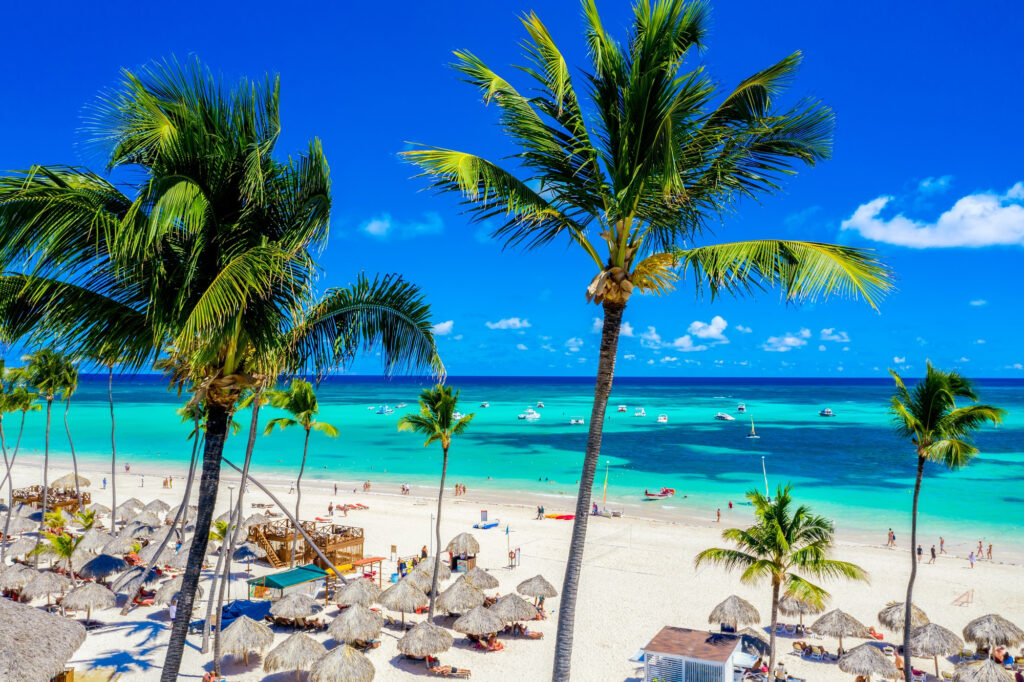
The islands of the region, as we know, are among the world's most popular tourist destinations, attracting millions of visitors annually with their beaches, nature, culture, and hospitality. As is commonly believed, the best resorts are located on the shores of the Caribbean Sea. Experienced travelers recommend visiting the islands during the dry season, outside the rainy season. For first-time visitors to the region, it is best to start with the larger islands. Direct flights from Russia are available to some islands, and there are also direct flights from Europe. A cruise is a way to visit several islands in one trip.
Popular resorts and attractions
Beach resorts:
- Varadero (Cuba)
- Punta Cana (Dominican Republic)
- Negril (Jamaica)
- Cable Beach (Saint Lucia)
- Grace Bay (Turks and Caicos)
The beaches of these resorts are famous for their white sand and crystal-clear water.
Historical attractions:
- Old Havana (Cuba)
- Bridgetown (Barbados)
- San Juan (Puerto Rico)
- Fort-de-France (Martinique)
Natural attractions:
- Pico Duarte National Park (Dominican Republic)
- Blue Mountains (Jamaica)
- Mount Soufrière (Saint Vincent)
- Pig Beach (Bahamas)
Underwater attractions:
- Mesoamerican Barrier Reef of Belize — divers are attracted to the Mesoamerican Barrier Reef in the Belize area
- Bonaire National Marine Park
- Reefs of the Cayman Islands
Diving enthusiasts will find unique opportunities here to explore the underwater world.
Saint Barthélemy: a pearl of the Caribbean Sea
Saint Barthélemy (full name Saint-Barthélemy) is a unique Caribbean island where luxury relaxation combines with the region's nature. A former Swedish colony, Saint Barthélemy is today an overseas territory of France and one of the world's most prestigious resorts.
Features of Saint Barthélemy:
- Exclusive beaches and coves
- Luxury villas and boutique hotels
- The famous Saint Barthélemy Airport, known for its challenging runway
- Prestigious yacht harbors
International regattas and festivals are regularly held on Saint Barthélemy, attracting elite guests from around the world. Despite its luxury resort status, Saint Barthélemy preserves an authentic atmosphere and French charm.
This island is particularly popular among celebrities and business elites who value privacy and the high level of service characteristic of Saint Barthélemy.
Types of leisure in the Caribbean
Beach holidays:
- Relaxation on the white-sand beaches of the islands
- Water sports (surfing, kitesurfing, windsurfing)
Cruises:
- A popular way to visit several islands in one trip
- Large cruise companies offer a variety of Caribbean itineraries
Diving and snorkeling:
- Exploring coral reefs
- Observing marine life
- Deep-sea fishing
Ecotourism:
- Hiking in the tropical forests of the islands
- Bird watching and wildlife observation
Cultural tourism:
- Visiting historical sites and museums on the islands
- Participation in local festivals and carnivals
Gastronomic tourism:
- Tasting local cuisine and beverages
- Visiting plantations and rum distilleries
Yachting:
- A yacht is a popular way to explore the islands
- Participation in regattas
Practical tips for travelers
Best time to visit:
- December–April: dry season, ideal for beach holidays
- May–November: wet season, fewer tourists and lower prices, but risk of hurricanes
- For tourists interested in sport fishing, the best time to visit is December through March (sport fishing is strictly regulated to conserve populations of rare fish species)
Visa requirements:
- For many countries of the archipelago, citizens require a visa
- Some islands offer visas on arrival
Transport:
- Between islands: local airlines, ferries
- On the islands: car rental, taxis, public transport
Safety:
- Observance of standard precautions
- Attention to local weather warnings
Health:
- Travelers are advised to have medical insurance
- Protection from sun and insects
Respect for local culture:
- Familiarization with local customs and traditions
- Respectful treatment of the local population
Environmental responsibility:
- Use of environmentally friendly sunscreen
- Avoiding damage to coral reefs and marine life
Currency:
- Many islands accept US dollars
- It is recommended to have local currency for small purchases
We should warn you that the best hotels on the islands are often booked 12 months in advance.
Tourism is a key economic sector for many Caribbean countries, and the region is constantly working to improve infrastructure and service quality. At the same time, there is growing attention to sustainable tourism, aimed at preserving the unique nature and culture of the islands for future generations. A typical Caribbean cruise itinerary includes visits to 12 different islands. Experienced travelers, however, often choose lesser-known islands.
Conclusion on the significance of the Caribbean region
Unique geographic location
- The islands are located at the intersection between North and South America, making it an important strategic point
- The diversity of islands and coastal territories creates a unique ecosystem and cultural mosaic
Rich historical heritage
- The history of the Caribbean archipelago reflects the complex processes of colonization, slavery, and struggles for independence
- Cultural mixing created a unique identity that influences world culture
Economic significance
- Tourism is a key sector, attracting millions of visitors annually
- Offshore financial centers play an important role in the global economy
- Agricultural products (such as rum, coffee, bananas) are known worldwide
Ecological value
- The islands have rich biodiversity, including unique flora and fauna species
- Coral reefs have global significance for marine ecosystems
Cultural influence
- Music (reggae, salsa), literature, and art from the islands have gained international recognition
- Caribbean cuisine holds an important place on the world gastronomic stage
Development prospects
Sustainable tourism:
- Development of ecotourism and responsible tourism to conserve natural resources
- Diversification of tourism offerings to attract new market segments
Economic diversification:
- Development of new industries, such as information technology and renewable energy
- Strengthening regional economic integration through CARICOM and other organizations
Adaptation to climate change:
- Implementation of measures to protect coastal areas from rising sea levels
- Development of sustainable infrastructure capable of withstanding extreme weather events
Preservation of cultural heritage:
- Support for local languages, arts, and traditions
- Development of cultural exchange programs to strengthen regional identity
Improving education and healthcare:
- Investments in human capital to ensure long-term development
- Development of medical tourism as a potential source of economic growth
Strengthening regional cooperation:
- Joint resolution of common problems, such as climate change and security
- Strengthening political influence on the international arena through collective action
The Caribbean islands, despite their small size, occupy a significant place in world history, culture, and economy. Each traveler will find something special here. The unique combination of natural beauty, rich history, and cultural diversity makes this region not only an attractive place for tourism but also an important participant in global processes.
The islands face serious challenges, including climate change, economic vulnerability, and social inequality. However, thanks to their resilience, adaptability, and rich potential, the Caribbean archipelago has every chance of overcoming these difficulties and continuing to play an important role in shaping the future of our planet.
Preserving the unique nature, culture, and identity of the islands while striving for sustainable development and innovation will be a key factor in determining its future in an ever-changing world.
Source
See also
Related articles
