Asturias: An Autonomous Community in Northern Spain
Asturias is the 'Green Spain' in the north: the Picos de Europa mountains, the Bay of Biscay coast, history and the distinctive character of the region.

Asturias (Spanish: Asturias, Asturian: Asturies) is a historic principality and modern autonomous community located in northern Spain. The official name of the region is the Principality of Asturias (Spanish: Principado de Asturias), reflecting its rich historical legacy as the first Christian kingdom on the Iberian Peninsula.
This unique region, covering 10,604 km², is known for its picturesque landscapes, including mountain ranges and the coast of the Bay of Biscay, which has earned it the name "Green Spain" (España Verde). Asturias is a distinctive cultural and historical region that has preserved its unique character throughout the centuries.
In Spain's modern administrative and territorial organization, Asturias has been granted the status of an autonomous community, which gives the region broad self-governance rights while maintaining the unity of the Spanish state. It is the only autonomous community in Spain that officially retains in its name the historic title of principality.
Key Facts About Asturias
- Key characteristics of the region:
- Official name: Principality of Asturias (Principado de Asturias)
- Status: Autonomous community of Spain
- Capital: Oviedo
- Official languages: Spanish (Castilian), Asturian (optional)
Geographic Location of Asturias
Location and Borders
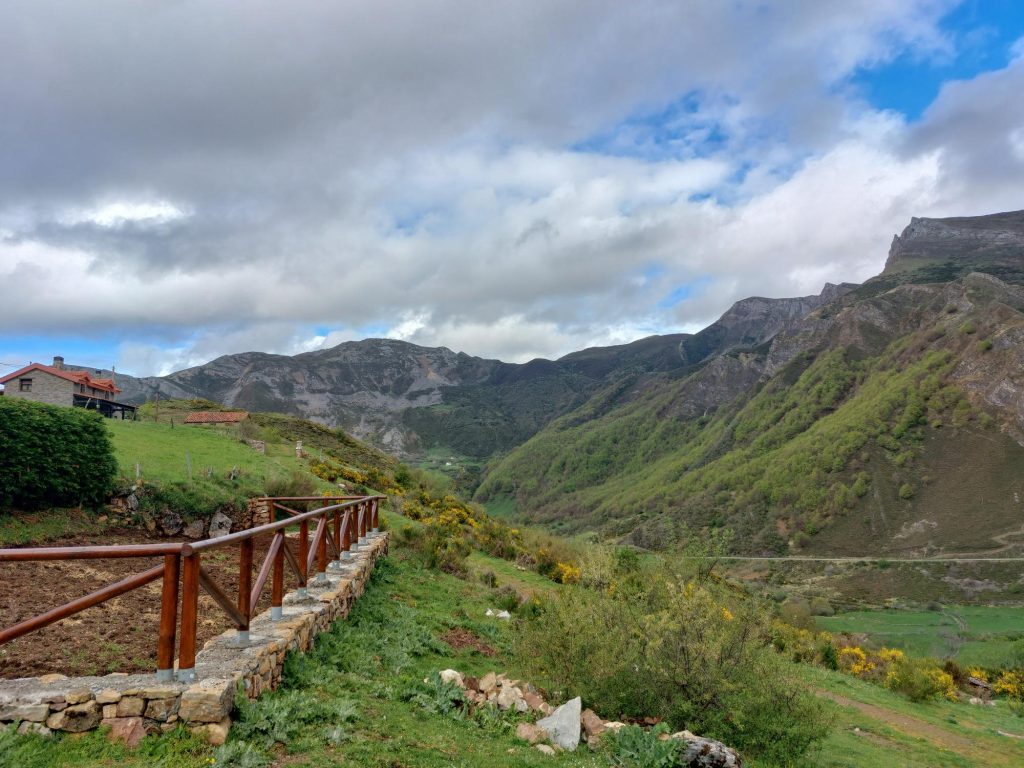
Asturias is located on the Bay of Biscay on the northern coast of the Iberian Peninsula, between 43° and 43°47′ north latitude and 4°49′ and 7°11′ west longitude. The region borders three autonomous communities of Spain:
- To the west is Galicia
- To the east is Cantabria
- To the south is Castile and León
- To the north is the Bay of Biscay (Cantabrian Sea)
Natural Features
The landscape of Asturias is characterized by a variety of natural zones:
- Coastal zone: Stretches for 345 km along the Cantabrian Sea, forming a picturesque coastline with numerous coves, bays and rocky cliffs.
- Mountain system: The Cantabrian Mountains with high peaks occupy a significant portion of the territory, with summits exceeding 2,500 meters (Torre de Cerredo – 2,648 m).
- Valleys: Between the mountain ranges are fertile river valleys, important for the region's agriculture.
Climate
Asturias is characterized by an oceanic climate with the following features:
- Mild winter (average temperature 8–10°C)
- Moderate summer (average temperature 18–20°C)
- High humidity year-round
- Frequent precipitation (about 1,000 mm per year)
Such climatic conditions contribute to the formation of a unique ecosystem, which is why the region is called Green Spain (España Verde).
Environmental Significance
The region's territory includes several protected natural areas:
- Picos de Europa National Park
- Natural reserves
- Protected landscape areas
- Natural monuments
The diversity of natural landscapes and climatic zones makes Asturias one of Spain's most ecologically rich regions.
Administrative Structure of Asturias
Status as an Autonomous Community
Asturias gained the status of an autonomous community on December 30, 1981, under Organic Law 7/1981. It is the only region in Spain that has retained in its official name the historic title of principality – the Principality of Asturias (Principado de Asturias).
Key characteristics of autonomy:
- Own parliament (General Junta)
- Regional government
- Special powers in education, healthcare and culture
- Right to use its own symbols (flag, coat of arms)
Historical Significance
Asturias holds special historical significance for Spain:
- First Christian kingdom on the Iberian Peninsula (8th century)
- Beginning of the Reconquista against Moorish rule
- Traditional title of heir to the Spanish throne – Prince of Asturias
Territorial Organization
Asturias' administrative division includes:
- Capital: Oviedo (Oviedo) – administrative and cultural center
- Major cities:
- Gijón (Gijón) – the largest city and port
- Avilés (Avilés) – an important industrial center
- Mieres (Mieres) – historic mining center
- Langreo (Langreo) – industrial city
Local Government
The territory is divided into 78 municipalities (concejos), each of which has:
- Its own municipal council
- Elected mayor
- Local administration
- A degree of autonomy in resolving local issues
Government System
The main authorities are:
- Legislative power: General Junta of the Principality of Asturias
- Executive power: Government of the Principality headed by a president
- Judicial power: High Court of Justice of Asturias
Population and Demographics of Asturias
Number and Distribution of Population
According to the latest data, the population of Asturias is approximately 1 million people, which represents about 2.1% of Spain's total population. The region's demographic indicators are characterized by the following features:
- Population density: 96.7 people per km²
- Urbanization: more than 80% of the population lives in cities
Distribution:
- Central agglomeration (triangle of Oviedo-Gijón-Avilés) – 80% of the population
- Mountain areas – sparsely populated
- Coastal zone – medium population density
Ethnic Composition
Asturians (asturianos) represent a distinctive ethnic group, formed as a result of long historical development:
Indigenous population:
- Descendants of ancient Cantabrians and Asturians
- Mixture with Celtic and Roman elements
- Influence of Visigothic culture
Modern composition:
- Predominance of Asturians
- Presence of other Spanish ethnic groups
- Growing immigrant communities
Language Features
The region has two main languages:
Spanish (Castilian):
- Official language
- Used in all spheres of life
- Main language of administration and education
Asturian (Astur-Leonese):
- Recognized as a regional language
- Has official protection
- Used in cultural life
- Taught optionally in schools
Demographic Trends
The current demographic situation is characterized by the following trends:
Age structure:
- High proportion of elderly population
- Declining birth rate
- Increased life expectancy
Migration processes:
- Internal migration to major cities
- Youth emigration
- Influx of foreign migrants
Key Characteristics of Asturias
Regional Economy
Asturias' economy has undergone significant transformation from its traditional industrial base to a modern diversified structure:
Industrial sector:
- Metallurgy and metal processing
- Food industry
- Chemical production
- Shipbuilding
Agriculture:
- Dairy farming
- Cider production
- Fishing
- Organic farming
Services:
- Tourism
- Banking sector
- Education
- Healthcare
Cultural Features
Asturias possesses a rich cultural heritage:
Traditional culture:
- Asturian music and dance
- Folk festivals and celebrations
- Traditional crafts
- Gastronomic traditions
Architectural heritage:
- Pre-Romanesque architecture (UNESCO site)
- Medieval churches and monasteries
- Historic urban ensembles
- Traditional rural architecture
Historical Landmarks
Main cultural heritage sites:
Religious monuments:
- Oviedo Cathedral
- Church of Santa María del Naranco
- Church of San Miguel de Lillo
Civil architecture:
- Historic center of Oviedo
- Old quarter of Gijón
- Revelliagigedo Palace
Natural Reserves
Main natural attractions:
National parks:
- Picos de Europa
- Ría de Narcéa Natural Park
- Fuentes del Narcéa Natural Park
Natural monuments:
- Beaches and coves of the Asturian coast
- Mountain ranges
- Caves and karst formations
Asturias' nature reserves are home to diverse flora and fauna, including rare species such as the Cantabrian brown bear and Pyrenean ibex.
How to Get to Asturias
Asturias has well-developed transportation infrastructure, making travel to Asturias convenient from various points in Spain and Europe.
Air Travel
The region has an international Asturias Airport (Aeropuerto de Asturias), located between Oviedo, Gijón and Avilés. The airport receives flights from major Spanish cities and European capitals.
Rail Travel
Train travel is a popular way to reach Asturias. High-speed ALVIA and RENFE trains connect the region's capital Oviedo with Madrid, covering the distance in 4–5 hours.
The train stops at major cities:
- Oviedo
- Gijón
- Avilés
Railway stations are also located in Llanes and other coastal towns.
Car Travel
For car travel, use:
- Highway A-66, connecting Asturias with central Spain
- Motorway A-8 (Cantabrian Highway), running along the northern coast from Galicia to the Basque Country
A car provides the opportunity to explore the region's surroundings at a comfortable pace.
Major Cities and Towns of Asturias
Oviedo – Capital of the Principality
Oviedo is the administrative capital of Asturias and the cultural center of the region. The city was founded in the 9th century by order of King Ramiro I and has preserved rich architectural heritage.
Main attractions of Oviedo:
- Cathedral of San Salvador – a 14th-century Gothic cathedral, symbol of the city and repository of important Christian relics. The cathedral is protected.
- Church of Santa María del Naranco – an outstanding monument of pre-Romanesque architecture from the 9th century. Located on Naranco Hill and is an important landmark. Included in the UNESCO World Heritage List.
- Church of San Miguel de Lillo – another masterpiece of 9th-century pre-Romanesque architecture on Naranco Hill.
Historic center of Oviedo abounds with plazas, narrow streets and traditional Asturian buildings. The city is known for numerous museums, including the Museum of Fine Arts of Asturias.
Oviedo is an excellent starting point for tourist routes through the region. An interesting fact is that sculptures from Vicky Cristina Barcelona adorn some of the city's streets.
Gijón – Largest City and Port Center
Gijón is the largest city of Asturias with a population of over 270,000. Located on the coast, Gijón combines industrial importance with tourist appeal.
Gijón attractions:
- Old fishermen's quarter of Cimadevilla (Cimadevilla) – a historic district on a hill, where narrow streets and traditional architecture are preserved.
- San Lorenzo Beach – the main city beach, 1.5 km long, with sea views, popular with tourists and locals.
- Niemeyer Center (Centro Niemeyer) – a modern cultural center designed by Brazilian architect Oscar Niemeyer. The center is an impressive structure on the seashore.
- Roman baths in Campo Valdés – an archaeological museum with remains of 1st-century Roman baths.
Gijón offers a magnificent range of opportunities for walks along the waterfront and experiencing the region's maritime culture.
Avilés – Industrial and Cultural Center
Avilés is located between Oviedo and Gijón and is the third-largest city of Asturias. The historic center of Avilés has retained a medieval layout with picturesque plazas and stone buildings.
Other Significant Towns
Cangas de Onís:
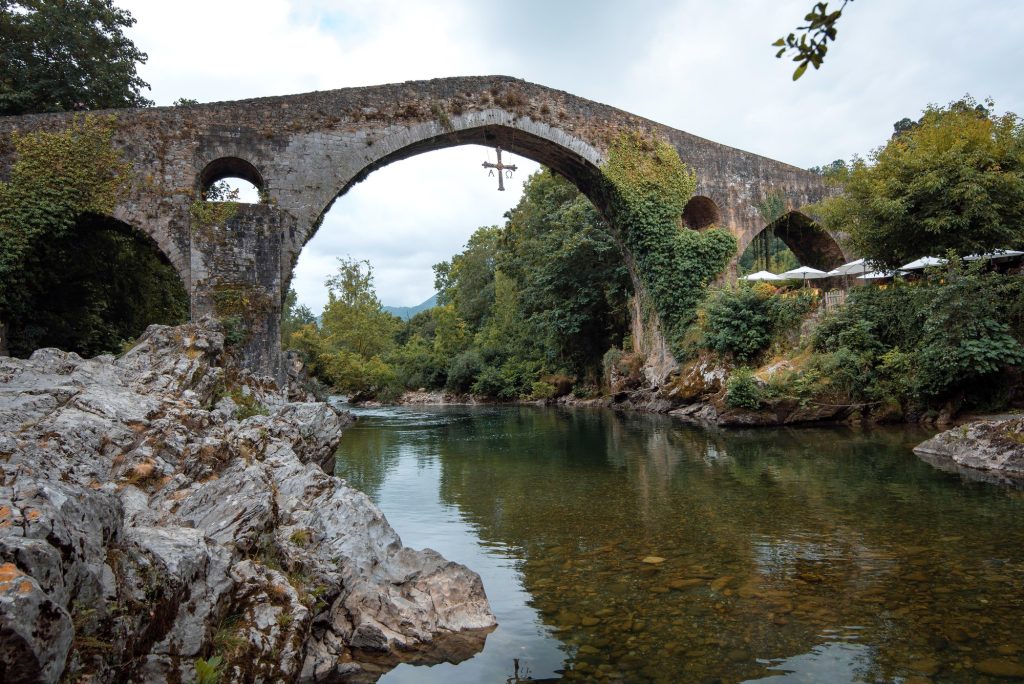
- Historic town, first capital of the Asturian kingdom. Known for the famous Roman bridge over the Sella River and proximity to Covadonga.
Llanes:
- Small coastal town in eastern Asturias with a magnificent old quarter and access to numerous beaches on the eastern coast.
Ribadesella:
- Picturesque fishing port at the mouth of a river, known for its beaches and culinary traditions.
Luarca:
- Traditional fishing village on the western coast with colorful houses and narrow streets.
Tourist Routes and Attractions of Asturias
Nature Parks and Reserves
Asturias offers diverse nature routes for eco-tourism enthusiasts:
Picos de Europa National Park:
- The most popular nature park in the region, with majestic mountains, located on the border with Galicia and the Basque Country. The park offers numerous tourist routes of varying difficulty, impressive mountain landscapes and opportunities for observing wildlife.
Sanctuary of Covadonga (Covadonga):
- The most important attraction in Picos de Europa National Park, the site where the Reconquista began. Covadonga has a basilica and a cave chapel. The road to the sanctuary passes through a picturesque valley.
Lakes of Covadonga (Lagos de Covadonga):
- Two glacial lakes at 1,000 meters altitude, accessible via a mountain trail from the sanctuary.
Somiedo Natural Park:
- A lesser-known but equally magnificent nature reserve in the mountains. Somiedo Natural Park is home to the Cantabrian brown bear. The park offers a route through traditional mountain villages and river valleys.
Ría de Narcéa Natural Park:
- Another important nature reserve with diverse ecosystems.
Coastal Attractions and Beaches
Asturias' 345 km coastline on the Bay of Biscay offers more than 200 beaches of various types:
Eastern coast:
- Gulpiyuri Beach (Playa de Gulpiyuri) – a unique inland beach separated from the sea by a system of underground tunnels
- Torimbia Beach (Playa de Torimbia) – one of the most picturesque beaches in the region with golden sand surrounded by cliffs
- Llanes beaches – about 30 beaches near the city, including the popular Playa de Toro
Central coast:
- Gijón beaches – city beaches, including San Lorenzo Beach and Poniente Beach
- Verdigio Beach – a quiet beach near Avilés
Western coast:
- Silence Beach (Playa del Silencio) – a small wild beach between cliffs, considered one of the most beautiful in Asturias
- Luarca beaches – picturesque fishing beach in a traditional port
- Castellana Beach – a wide sandy beach in the west
A walk along the coast reveals many hidden coves and viewpoints overlooking the sea.
Gastronomy of Asturias
Asturian cuisine is among the richest in Spain's regions, based on high-quality local products.
Cider – Traditional Drink of Asturias
Asturian cider (sidra) is the symbol of Asturias and an integral part of Asturian culture. The region produces over 80% of Spanish cider. Tradition dictates pouring cider in a special way – from arm's height to aerate the drink. Cider should be poured into a wide glass in small portions.
Cider is served in special establishments – cider houses (sidrerías), where you can sample various varieties of this drink. The region has hundreds of cider producers.
Traditional Dishes
Fabada Asturiana (Fabada asturiana):
- The main dish of Asturian cuisine, a hearty stew of white beans with cured meats (chorizo and morcilla), bacon and pork. The dish is considered a symbol of regional cuisine.
Cachopo (Cachopo):
- Veal cutlet stuffed with jamón and cheese, breaded and fried
Caldo (Caldo):
- Traditional broth-based soup with greens
Asturian Cheeses
Asturias produces over 40 varieties of cheese, many of which have protected designations:
- Cabrales (Queso de Cabrales) – famous blue cheese produced in the Picos de Europa mountains. Cabrales cheese is aged in limestone caves and has an intense flavor
- Gamonedo – smoked blue cheese
- Afuega'l Pitu (Afuega'l pitu) – soft cone-shaped cheese
- Casín (Casín) – hard fermented cheese
Cured Meats
Asturian sausage is known for high quality. The most famous are:
- Chorizo Asturiano – pork sausage with paprika
- Morcilla – blood sausage
- Lomo – cured pork loin
A stay in the region for food tourists is a real pleasure, as you can explore the rich culinary traditions in villages and towns throughout the region.
Practical Information for Tourists
Accommodation and Housing Prices
Asturias offers a wide range of accommodation options. Housing prices vary depending on season and location:
- In Oviedo and Gijón: mid-range hotels from €50–80 per night
- Rural houses (casas rurales): from €40–70 per night
- Apartments: from €45–90 per night
- Hostels: from €15–25 per bed
Accommodation prices rise during the summer season (July–August) and during local holidays.
Best Time to Visit
Travel to Asturias can be planned year-round, but the most comfortable times in Asturias are:
- Spring (April–June): mild weather, blooming valleys
- Summer (July–August): warm sea, beach season
- Fall (September–October): harvest season, cider festivals
Useful Information
Asturias has well-developed tourist infrastructure with information centers in Oviedo, Gijón, Avilés and other towns. Many routes through nature parks are equipped with signs and rest areas.
Asturias' attractions are enough for several weeks of active travel.
Conclusion: Modern Significance of Asturias
Contemporary Significance of the Region
Asturias in the 21st century is a dynamically developing region that combines:
Economic transformation:
- Transition from traditional industry to innovative economy
- Development of eco-tourism
- Introduction of modern technology into traditional sectors
- Development of renewable energy
Unique Features of Asturias
The region stands out among other autonomous communities of Spain with the following characteristics:
Natural heritage:
- Preservation of unique ecosystems
- Biodiversity
- Picturesque landscapes
Cultural distinctiveness:
- Preservation of Asturian language and traditions
- Rich historical heritage
- Unique gastronomic culture
Development Prospects
The main directions for the region's development include:
Sustainable development:
- Eco-tourism
- Green energy
- Conservation of natural heritage
Socioeconomic development:
- Innovative technologies
- Development of education
- Support for small business
Asturias is a unique region of Spain, where rich historical heritage, natural resources, cultural distinctiveness and modern economic development are harmoniously combined. The region successfully preserves its identity while adapting to the challenges of modern times and developing new directions in economy and tourism.
The Principality of Asturias continues to play an important role in modern Spain, serving as an example of the successful combination of tradition and innovation, natural and cultural heritage, industrial development and environmental sustainability.


