Natural Resources of Mongolia
Natural resources of Mongolia: reserves of copper, gold, coal, uranium and rare metals—what one of the world's resource-rich countries possesses.

Mongolia possesses a colossal natural resource potential, ranking among the world's wealthiest countries by mineral reserves. Across a territory of 1.564 million km², the country concentrates significant mineral resources, vast land reserves and diverse biological resources.
Overview of natural resource potential
Mongolia's subsoil contains over 80 types of minerals in more than 1,000 deposits. The country holds leading positions in reserves of copper, molybdenum, gold, coal, uranium and rare earth metals. Mongolia's natural wealth includes not only minerals but also extensive pasturelands, covering approximately 80% of the country's territory.
Significance of resources for the national economy
The mining industry generates over 20% of Mongolia's GDP and provides approximately 90% of export revenues. Natural resources form the foundation of the national economy and serve as the primary driver of economic growth. Development of the extractive sector attracts significant foreign investment, contributing to modernization of production infrastructure.
Geographic location of major deposits
The country's largest mineral deposits are concentrated in several regions:
Southern Mongolia—copper and gold deposits (Oyu Tolgoi) Central Mongolia—coal basins (Tavan Tolgoi) Northern Mongolia—iron ore and phosphate deposits Eastern Mongolia—uranium and oil deposits
The strategic location of deposits near the borders with China and Russia provides favorable conditions for raw material exports and development of international cooperation in extraction and processing of natural minerals.
Mineral resources
Metallic minerals
Mongolia possesses significant reserves of metallic minerals, which form the foundation of the country's mining industry. Explored deposits contain strategically important metals:
Copper—reserves estimated at 55.2 million tons; the Oyu Tolgoi deposit contains 25 million tons Gold—explored reserves exceed 2,500 tons Iron ore—reserves total over 400 million tons Molybdenum—approximately 54,000 tons of confirmed reserves Zinc—reserves estimated at 1.3 million tons
Non-metallic minerals
The country's territory is rich in non-metallic minerals with important industrial applications:
Phosphates—reserves exceed 2.5 billion tons Fluorspar—over 12 million tons Construction materials—numerous deposits of limestone, granite and marble Gemstones—deposits of agate, chalcedony and jasper
Fuel and energy resources
Mongolia possesses substantial reserves of energy raw materials:
Coal—total reserves estimated at 175 billion tons, including Tavan Tolgoi deposits with 6.4 billion tons of coking coal Uranium—explored reserves total 143,500 tons Oil—potential reserves estimated at 4–6 billion barrels
Volume of reserves of major resources
As of 2026, Mongolia holds leading positions globally for reserves of several minerals:
2nd place worldwide in rare earth metal reserves 3rd place in Asia for uranium reserves 10th place worldwide in copper reserves 15th place worldwide in gold reserves
Most major deposits are characterized by favorable geological conditions for open-pit mining, which significantly reduces extraction costs.
Land and soil resources
Structure of land fund
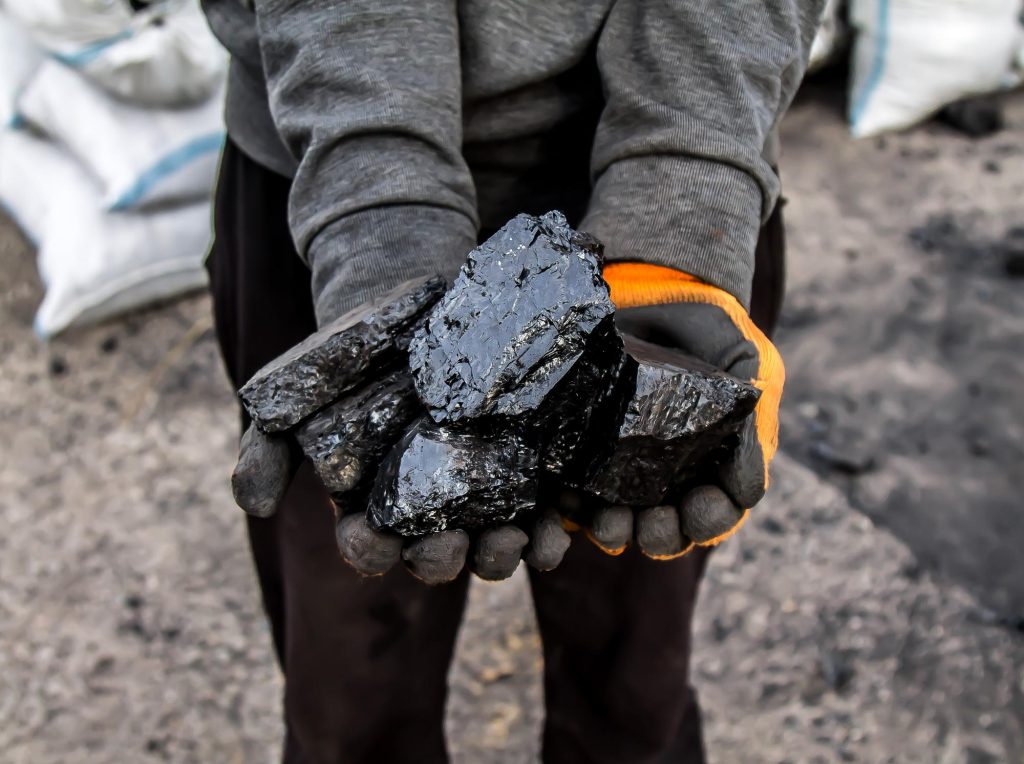
The total area of Mongolia's territory is 156.4 million hectares. The land fund structure is distributed as follows:
Pastures and meadows—110.3 million ha (70.5% of territory) Forest fund—14.3 million ha (9.2%) Arable land—1.2 million ha (0.8%) Populated areas—0.7 million ha (0.4%) Protected territories—27.2 million ha (17.4%) Other lands—2.7 million ha (1.7%)
Agricultural lands
Mongolia's agricultural land is characterized by the following features:
Arable land is concentrated primarily in the northern provinces Crops grown include wheat, potatoes and vegetables Soils are chestnut and brown types, typical of steppe regions Irrigated land comprises approximately 84,000 ha
The potential for expanding arable land is estimated at 3.8 million ha, creating opportunities for agricultural development.
Pasture territories
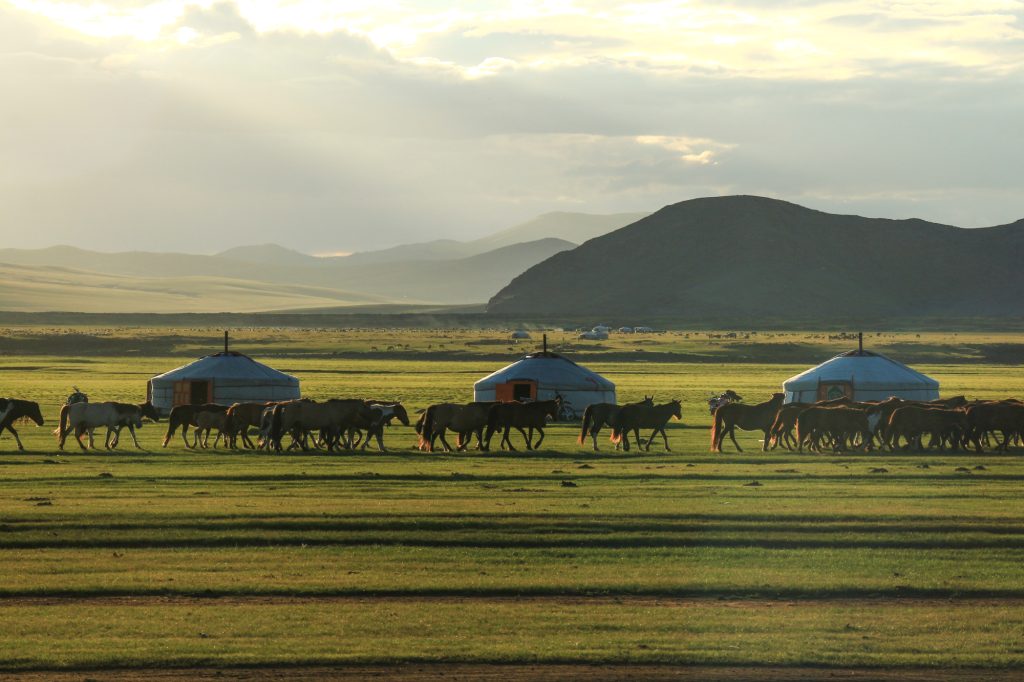
Pastures are a key natural resource of Mongolia, supporting the development of traditional livestock farming:
Summer pastures—32% of total area Winter pastures—28% Spring and autumn pastures—40%
Characteristics of pasture territories:
Steppe pastures—most productive, with yields up to 8–12 c/ha of dry matter Desert-steppe pastures—average productivity, 4–6 c/ha Alpine pastures—used during summer months Desert pastures—low productivity, but important for camel herding
The current state of pastures is characterized by increased pressure from growing livestock numbers, requiring implementation of systems for rational use of pasture resources.
Water resources
Surface water
Mongolia possesses substantial surface water resources distributed across three major river basins:
River systems: Arctic Ocean basin (Selenge River)—30.6% of territory Pacific Ocean basin (Kerülen River)—10.2% of territory Central Asian endorheic basin—59.2% of territory
Major rivers: Selenge—1,024 km long, the country's largest river Orkhon—1,124 km long Kerülen—1,264 km long Toes—568 km long
Lakes: Khövsgöl—freshwater lake, water volume 383.3 km³ Uvs—saline lake, area 3,350 km² Khar-Us—saline lake, area 1,407 km²
Groundwater
Mongolia's groundwater reserves are estimated at 10.8 km³, of which:
Renewable resources—6.1 km³ per year Explored operational reserves—2.4 km³ Available for use—1.6 km³
Major aquifers are located:
In intermontane depressions—45% of reserves In river valleys—35% of reserves In artesian basins—20% of reserves
Mineral springs
Over 500 mineral springs have been identified in Mongolia, classified as:
Thermal springs (temperature above 20°C)—over 40 locations Cold mineral springs—over 450 locations
Types of mineral waters: Carbonated—43% of springs Nitrogen thermal springs—28% of springs Sulfide—15% of springs Radon—14% of springs
Many springs are used for therapeutic purposes and development of spa tourism.
Biological resources
Plant life
Mongolia's flora comprises over 3,000 species of higher plants distributed across various ecological zones:
Main plant communities: Alpine vegetation—over 300 species Mountain taiga vegetation—approximately 750 species Steppe vegetation—over 1,000 species Desert-steppe vegetation—approximately 450 species Desert vegetation—over 500 species
Valuable plant resources: Medicinal plants—over 845 species Forage plants—approximately 600 species Food plants—over 200 species Industrial plants—approximately 180 species Ornamental plants—over 480 species
Animal life
Mongolia's fauna is characterized by great diversity and includes:
Species composition: Mammals—138 species Birds—476 species Reptiles—22 species Amphibians—6 species Fish—76 species Insects—over 13,000 species
Game animals: Ungulates—gazelle, deer, wild boar Furbearers—fox, corsac, wolf Game birds—ducks, geese, partridges
Forest resources
Forests cover 9.2% of Mongolia's territory (14.3 million ha) and are represented by the following types:
Main forest-forming species: Siberian larch—79.2% of forested area Siberian pine—10.5% Scots pine—5.4% Birch and aspen—4.9%
Forest distribution: Mountain forests—90% of forest fund Floodplain forests—7% Saxaul forests—3%
Total timber reserves are estimated at 1.3 billion m³, with annual growth of approximately 12.3 million m³. Forests perform important ecological functions, including soil erosion protection and water resource conservation.
Economic significance of natural resources
Role in the national economy
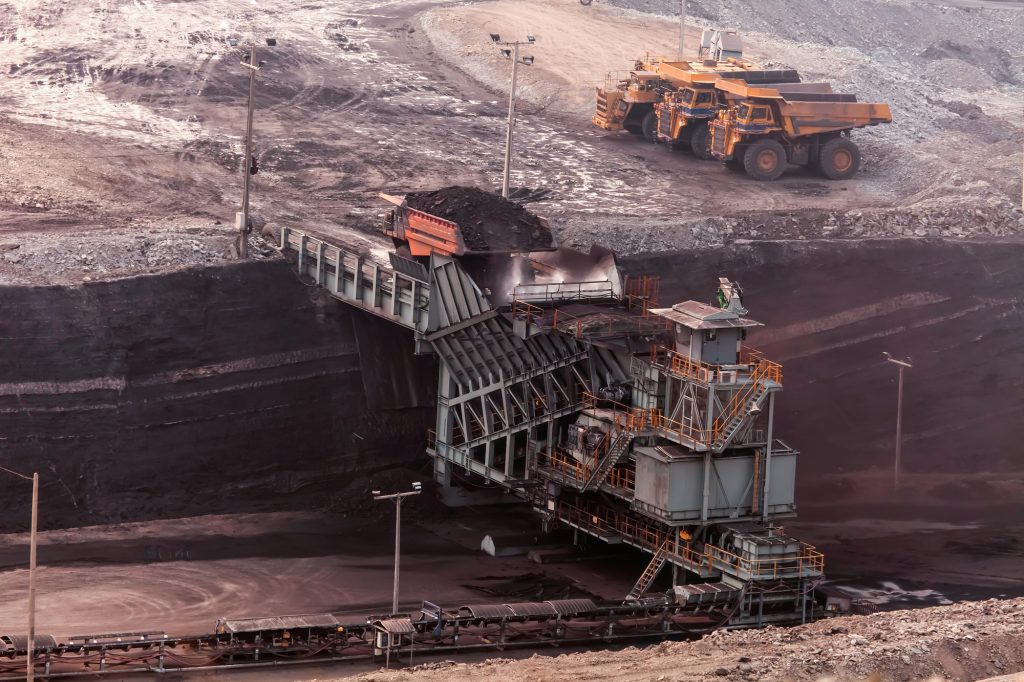
Natural resources play a crucial role in Mongolia's economy, forming the basis of national prosperity:
The mining industry generates over 20% of the country's GDP The sector accounts for 70–80% of industrial production Mining industry accounts for over 90% of export revenues The industry employs approximately 4% of the working-age population
Key indicators: Annual coal production—over 80 million tons (in 2025, coal exports reached a record 83.9 million tons) Copper production—approximately 1.5 million tons of concentrate Gold extraction—approximately 15–20 tons per year Molybdenum production—approximately 5,000 tons
Export potential
Structure of resource exports:
Mineral raw materials—85% of total exports Livestock products—7% Timber—0.5% Other resources—7.5%
Main export destinations: China—80% of mineral raw material exports Russia—10% of exports South Korea—5% of exports Other countries—5%
Comparison with other regional countries
Mongolia's position in regional context:
Mineral resources: 1st place in Central Asia for copper reserves 2nd place in the region for coal reserves 3rd place in Asia for uranium reserves
Land resources: 1st place in the region for pasture per capita 4th place in Asia for total agricultural land area
Compared to neighboring countries, Mongolia has higher per capita natural resource endowment, creating significant potential for economic development.
Conclusion
Prospects for resource development
The potential for developing Mongolia's resource base is characterized by the following directions:
Exploration of new mineral deposits using modern technologies Implementation of innovative extraction and processing methods Development of renewable energy, particularly solar and wind Modernization of water resource management and implementation of water-saving technologies
Expected development outcomes:
Increase in mineral extraction volumes by 30–40% by 2030 Growth in the processing industry share to 35% of GDP Creation of new jobs in the mining sector Attraction of foreign investment worth USD 10–12 billion
Challenges and issues
Main challenges in resource development:
- Environmental risks from deposit exploitation
- Need to modernize transportation infrastructure
- Dependence on global commodity prices
- Shortage of skilled labor
Key challenges for sustainable development:
- Ensuring balance between economic growth and environmental preservation
- Development of processing industries to increase added value
- Diversification of Mongolia's economy and reduction of dependence on the raw materials sector
- Improvement of legislative framework in subsurface resource management
Development potential
Strategic directions for resource use:
Creation of mining and metallurgical clusters Development of renewable energy Implementation of environmentally clean extraction technologies Expansion of international cooperation
Long-term development goals:
Achievement of sustainable economic growth Improvement of population living standards Environmental balance preservation Strengthening of positions on the global raw materials market
Mongolia remains one of the world's landlocked countries, but its rich natural resources and advantageous geographic location between China and Russia create favorable conditions for development of the Mongolian economy. Mongolia's government continues efforts to create conditions for sustainable economic development, attract foreign tourists and develop various economic sectors.
Ulaanbaatar, Mongolia's capital, remains the center for making key decisions on the country's economic development. The State Great Khural of Mongolia regularly considers issues related to mining industry and agriculture development. Major mining centers, such as Erdenet, play an important role in the country's industrial development.
Mongolian exports of natural resources remain the basis of the economy, while a significant portion of industrial production consists of mineral extraction. High livestock per capita and developed pastoral animal husbandry continue to characterize Mongolia's economy.
Development of railways and transportation infrastructure facilitates export of Mongolia's resources to China and other regional countries. Mongolia's deposits, including major coal operations, create the foundation for long-term economic growth.
Such minerals as fluorspar and semi-precious stones also represent interest for development of Mongolia's exports. Experts forecast that over the coming years, Mongolia's economy will grow at an average rate of 5–7% annually thanks to abundant natural resources and development of the mining industry.
According to various analytical agencies, Mongolia's system of state management of natural resources is gradually improving. Mongolia's president regularly emphasizes the importance of rational use of natural conditions for the country's sustainable development.
Mongolia's information agency reports growing interest among international investors in Mongolia's resources. Borders with China and Russia create favorable conditions for development of trade relations and export of natural resources.
Thus, Mongolia remains an important player on the global natural resources market, and its rich mineral deposits and advantageous geographic location create the foundation for further economic development of the country, despite the absence of direct access to the sea.


