Canada — the Northern Jewel of America
Canada: 10 provinces and 3 territories from the Atlantic to the Pacific Ocean — nature, multiculturalism, and high quality of life.

Canada is one of the most remarkable countries in the world, astounding with its vast scale, natural diversity, and unique culture. The second-largest country by territory in the world, it occupies a significant portion of North America and is a federation of ten provinces and three territories. Canada has become a symbol of tolerance, multiculturalism, and high quality of life, attracting millions of tourists and immigrants from around the world.
Geography and nature
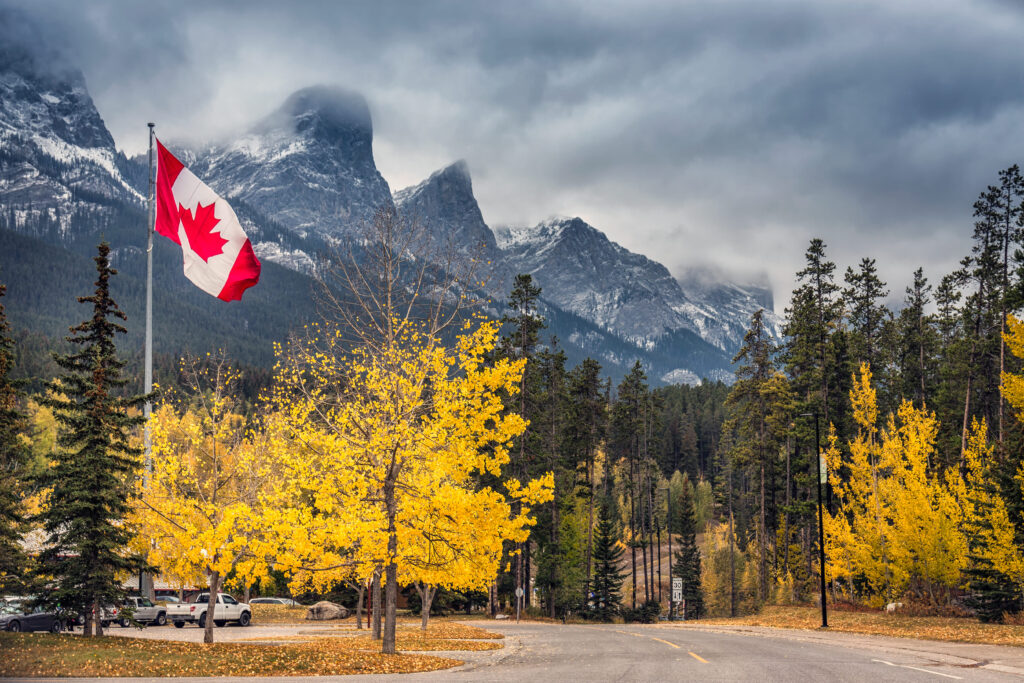
Canada occupies a vast territory in North America, stretching from the Atlantic to the Pacific Ocean and from the border with the USA to the south to the Arctic Ocean to the north. Canada's territory covers almost 10 million square kilometers, making it the second-largest country after Russia.
The country's relief is characterized by incredible diversity. The western part is dominated by the majestic Rocky Mountains, which stretch along the Pacific coast. The central regions are represented by vast prairies, especially in the provinces of Saskatchewan and Alberta. The eastern part is characterized by hilly terrain and lowlands, including the valley of the Saint Lawrence River.
The Canadian Shield — an ancient geological structure — occupies a significant part of the territory, rich in mineral resources. It contains deposits of gold, silver, nickel, uranium, and other valuable metals. The northern part of the country is represented by arctic tundra with permafrost.
Canada's climate varies from temperate in the south to arctic in the north. Most of the territory is characterized by a continental climate with cold winters and warm summers. Coastal areas enjoy milder climate conditions due to the influence of the oceans.
Canada is renowned for its natural wealth. Vast taiga forests cover the northern regions, while mixed and deciduous forests are located in the south. The Great Lakes — a system of freshwater bodies on the border with the USA — represent the world's largest freshwater reservoir. The Saint Lawrence River connects these lakes to the Atlantic Ocean, creating a crucial waterway.
The country's biodiversity is awe-inspiring. Bears, moose, caribou, wolves, lynx, and many other animal species inhabit the land. National parks and reserves protect unique ecosystems, including the famous parks in the Rocky Mountains and arctic reserves.
History
Canada's history begins with indigenous peoples who inhabited these lands thousands of years before the arrival of Europeans. The Inuit adapted to arctic territories, while numerous Native American tribes inhabited the rest of the continent, developing rich cultural traditions and complex social systems.
European exploration began in the 16th century. Jacques Cartier landed on the Gaspé Peninsula in 1534, claiming these lands for France. In 1608, Samuel de Champlain founded Quebec, initiating permanent French colonization. French colonists established trade relations with the Huron and other Native American tribes, developing the fur trade.
New France flourished in the 17th and 18th centuries, but the Seven Years' War altered the region's fate. Following France's defeat, New France came under British control by the Treaty of Paris in 1763. British colonization introduced new governance, but Quebec's French population preserved its culture and language.
As a result of the American Revolution, thousands of Loyalists resettled in Canadian colonies. Quebec was divided into two provinces: Upper Canada (present-day Ontario) and Lower Canada (present-day Quebec).
On July 1, 1867, four British colonies — Ontario and Quebec, Nova Scotia, and New Brunswick — united to form the Dominion of Canada, establishing a federal state with its capital in Ottawa. Canada became the first dominion of the British Empire, gaining significant autonomy.
As a result, the province of Manitoba joined the Confederation in 1870. This was followed by British Columbia (1871), Prince Edward Island (1873), Saskatchewan and Alberta (1905), and finally, Newfoundland and Labrador (1949).
Canada gradually achieved full independence from Britain. After World War I, the country gained the right to sign international treaties. The Statute of Westminster in 1931 recognized Canada as a sovereign state. Final independence was achieved in 1982, when Canadian Prime Minister Pierre Trudeau adopted a new Canadian Constitution.
Government structure
Canada is a constitutional monarchy and federal state, where the British monarch, represented by a governor general, formally remains the head of state. However, in practice, Canada functions as a parliamentary democracy with a strong federal system.
The federal capital is the city of Ottawa, located in the province of Ontario on the border with Quebec. The country's capital, Ottawa, was chosen by Queen Victoria in 1857 as a compromise solution between the claims of Toronto and Montreal.
The Canadian Parliament consists of two chambers: the elected House of Commons and the appointed Senate. The Prime Minister of Canada is the head of government, usually the leader of the party that wins a majority in the House of Commons. The system is based on the British Westminster model adapted to the federal structure.
The Canadian Constitution includes the British North America Act of 1867 and the Canadian Charter of Rights and Freedoms of 1982. Canada's constitutional history reflects evolution from colonial status to full independence.
The federation consists of ten provinces and three territories. Provinces have broad authority over education, healthcare, and natural resources. Each province has its own parliament and premier. Territories are governed by the federal government but exercise delegated self-governance powers.
The judicial system is headed by the Supreme Court of Canada, which is the highest court of appeal and interpreter of the Constitution. The system is based on English common law in most provinces, except Quebec, where the French civil law system applies.
Population and languages
Canada's population is approximately 40 million people, making it one of the least densely populated countries in the world despite its enormous territory. Population density is extremely uneven — most Canadians live in a narrow strip along the southern border with the USA.
Canada is highly urbanized: more than 80% of the population lives in cities. Canada's largest cities include Toronto (approximately 3 million in the city, 6 million in the metropolitan area), Montreal (1.8 million), Vancouver (675 thousand), and the country's capital Ottawa (approximately 1 million).
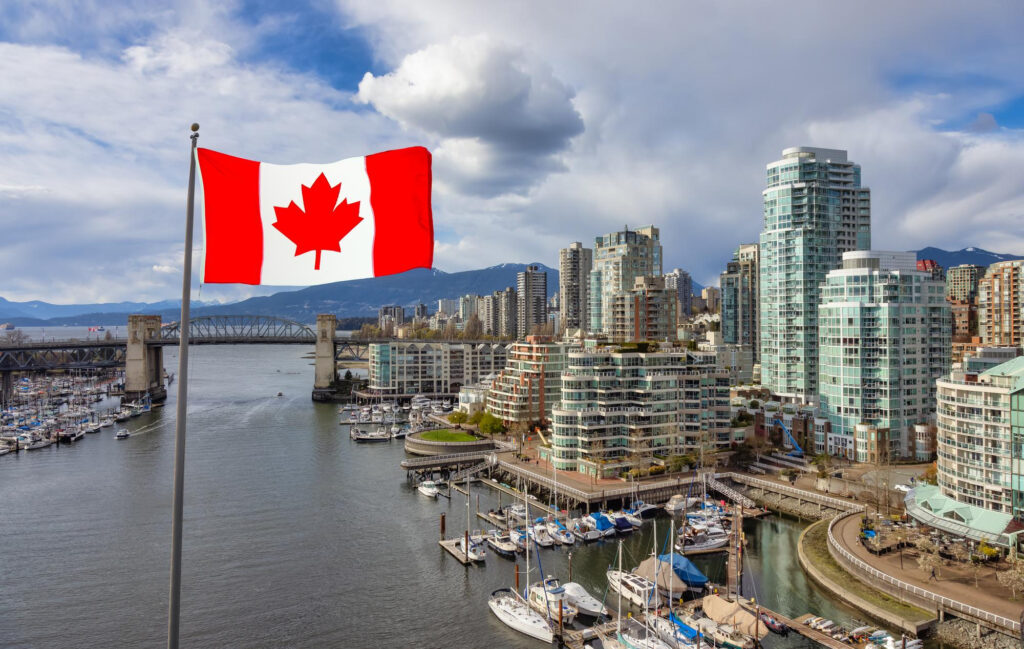
Toronto is the largest city and economic center of the country, located in the province of Ontario on the shore of Lake Ontario. Montreal is the largest city of Quebec province and a center of Francophone culture. Vancouver serves as the gateway to the Asia-Pacific region in British Columbia.
The official languages of Canada are English and French. Bilingualism is enshrined in the Constitution, and all federal services must provide services in both languages. French predominates in Quebec, where the majority of French Canadians live, while English dominates in the other provinces.
Immigration plays a key role in the country's demographic development. Canada admits approximately 400,000 immigrants annually, which is one of the highest rates in the world. The official multiculturalism policy, adopted in 1971, encourages the preservation of ethnic traditions while promoting integration into Canadian society.
The ethnic composition of the population reflects a history of immigration. The largest groups are Canadians of British and French descent, but the number of people from Asia is growing rapidly, particularly from China, India, and the Philippines. Indigenous peoples (Native Americans, Inuit, and Métis) number approximately 1.7 million.
Economy

Canada's economy is one of the largest in the world with a GDP exceeding $2 trillion. The country is part of the G7 and G20, playing an important role in the global economy. The Canadian dollar is one of the major reserve currencies.
Natural resources form the foundation of Canada's economy. The country is the world's largest oil producer outside OPEC, possessing enormous oil sands reserves in Alberta. The province of Alberta produces the majority of Canada's oil and natural gas.
The forestry industry remains a traditionally important sector. Canada is the world's largest exporter of forest products, including lumber, pulp, and paper. Vast forest resources are concentrated in British Columbia, Ontario, and Quebec.
The mining industry utilizes rich mineral deposits. Canada leads the world in uranium production, nickel, zinc, and ranks highly in the extraction of gold, silver, copper, and other metals.
Agriculture specializes in producing wheat, barley, canola, and other grain crops in the prairies. The provinces of Saskatchewan, Alberta, and Manitoba are the breadbasket of the country. Canada is among the world's largest exporters of agricultural products.
Manufacturing is concentrated in the central provinces of Ontario and Quebec. Automotive production, aerospace industry, equipment manufacturing, and chemical industry are key sectors.
Canada's financial sector is considered one of the most stable in the world. Major Canadian banks successfully weathered the 2008 global financial crisis thanks to conservative regulation.
Foreign trade plays a critical role in the economy. The USA is the largest trading partner, accounting for approximately 75% of Canadian exports. The NAFTA agreement (now USMCA) creates favorable conditions for trade in North America.
Society and culture
Canadian society is built on the principles of equality, tolerance, and social justice. The healthcare system provides universal medical care to all citizens and permanent residents. Each province manages its own healthcare system with federal funding.
Education falls under the jurisdiction of provinces but maintains high standards across the country. Canadian universities, including the University of Toronto, McGill University in Montreal, and the University of British Columbia in Vancouver, rank among the world's best.
Science and research receive significant government support. Canada is a world leader in medical research, information technology, and engineering. The Royal Ontario Museum in Toronto showcases Canada's rich scientific heritage.
Cultural life reflects the diversity of Canadian society. Hockey is the national sport and an important part of Canadian identity. The maple leaf is the country's official symbol, reflecting the connection to nature.
Canadian literature is represented by outstanding authors such as Margaret Atwood and Alice Munro (Nobel Prize laureate). Cinema develops with support from state programs, creating unique Canadian films.
Multiculturalism is official policy, encouraging the preservation of ethnic traditions. Numerous festivals celebrate cultural diversity, from the Winter Carnival in Quebec to the Calgary Stampede in Alberta.
French culture thrives in Quebec and other Francophone communities. The province of Quebec maintains its unique identity through language, culture, and a legal system based on French civil law.
Foreign policy and international relations
Canada plays an active role in international relations as a middle power with global interests. The country is a member of the UN, NATO, G7, G20, and the Commonwealth of Nations, actively participating in addressing world problems.
Special relations connect Canada to the USA — its largest trading partner and security ally. Cooperation spans continental defense through NORAD, trade through USMCA, and joint management of border waters.
Peacekeeping has become an important part of Canadian foreign policy. Canadian peacekeepers have participated in UN operations worldwide, contributing to international stability. Lester B. Pearson, Canadian prime minister, received the Nobel Peace Prize for developing the concept of UN peacekeeping.
Arctic diplomacy is gaining importance due to climate change and growing interest in arctic resources. Canada asserts its sovereignty in the Arctic, including rights to the Northwest Passage, while supporting international cooperation through the Arctic Council.
Relations with Europe remain important due to historical ties and the CETA trade agreement with the EU. Canada is also developing relations with the Asia-Pacific region, particularly with China, Japan, and India.
Practical information for travelers
Most tourists visiting Canada require a visa or electronic travel authorization (eTA). Citizens of visa-exempt countries must obtain an eTA online before travel. The passport must be valid for the entire duration of stay.
The currency is the Canadian dollar. Credit cards are accepted everywhere; ATMs are available in cities and tourist areas. Tips typically range from 15-20% in restaurants and for services.
The transportation system includes a well-developed network of airlines, railways, and bus routes. Via Rail provides passenger transportation between major cities. Driving is on the right side of the road; roads are well-maintained.
Medical insurance is mandatory for tourists, as medical services are very expensive for non-residents. Canada is safe for travel with low crime rates.
Major attractions include Niagara Falls, the Rocky Mountains, Banff and Jasper national parks, Quebec City with its historic districts, and numerous museums in major cities.
Climate conditions vary by season. Summer (June–August) is the best time for most tourist activities. Winter offers excellent opportunities for winter sports, especially in the Rocky Mountains and Quebec province.
Currently, Canada continues to attract tourists with its pristine nature, friendly population, and high-quality tourism infrastructure, remaining one of the world's most desired destinations for travel.


