The Alps: Europe's Greatest Mountain System
The Alps are Europe's largest mountain system: glaciers, peaks above 4,000 m, nature and the mountains' role in the continent's life.

The Alps represent the largest and most significant mountain system in Europe, stretching through the central part of the continent. This magnificent mountain chain, formed approximately 65 million years ago, is not merely a natural barrier between countries but also a unique natural and cultural phenomenon that defines the appearance of modern Europe.
The Alpine region covers an area of approximately 200,000 km² and contains more than 1,800 glacial formations. The mountain system is characterized by impressive dimensions: the average height of the ridges is 2.5 km, and some peaks exceed 4,000 m above sea level. The Alps are famous for their diverse natural zones and unique landscapes.
Main Characteristics
Length: approximately 1,200 km from west to east and 150 to 400 km from north to south
Geological structure: young folded mountains formed as a result of Alpine orogeny
Relief: characterized by sharp peaks, deep valleys, and numerous glacial formations
Climate: pronounced elevation zones with significant differences between northern and southern slopes
The Alps play a key role in shaping Europe's climate, serve as the source of the continent's major rivers, and are home to unique plant and animal species. This Alpine mountain system not only determines the natural landscape of the continent but also exerts substantial influence on the economic, cultural, and social development of the region.
It is important to note that the Alps have a complex ecosystem that includes many natural zones: from foothill forests to eternal snow on the peaks. Each elevation zone is characterized by its own climate, vegetation, and animal life, creating unique biological diversity in the Alpine region.
Geographic Location
Alpine Region Countries
The Alps are located in eight European countries. The Alpine mountain system extends from the Ligurian Sea to the Middle Danube Plain and passes through the following countries. Many travelers are interested in which countries the Alps are in:
France: occupies the western part of the Alps with the famous Mont Blanc and Dauphiné massifs
Switzerland: is located in the central part with the famous Bernese and Pennine Alps
Italy: covers the southern slopes from the Maritime to the Julian Alps
Austria: includes a significant part of the Eastern Alps
Germany: a small part of the Northern Limestone Alps
Slovenia: the eastern terminus of the Alps
Liechtenstein: is located in the Central Alps
Monaco: adjoins the Maritime Alps
Interestingly, Austria and Germany together form the northern Alpine region with characteristic limestone formations.
Mountain System Extent
The Alps form an arc-shaped mountain chain extending from the shores of the Mediterranean Sea to the Middle Danube Plain. Main parameters:
Total length: 1,200 km
Width: 150 to 400 km
Total area: approximately 200,000 km²
Major Ridges and Massifs
The Alps are traditionally divided into three major segments. The territory of the modern Southern Alps includes numerous historical regions.
Western Alps
The High Western Alps include the following major massifs:
— Ligurian Alps
— Maritime Alps
— Provence Alps
— Cottian Alps
— Dauphiné Alps
— Graian Alps
— Pennine Alps
Central Alps
— Bernese Alps
— Lepontine Alps
— Glarus Alps
— Rhaetian Alps
Eastern Alps
— Ötztal Alps
— Zillertal Alps
— Lombard Alps
— Dolomites
— Carnic Alps
— Julian Alps
— High Tauern
At the intersections of the ridges, important passes are formed that historically served as communication routes between regions. The most famous of them – Saint-Gotthard, Simplon, and Brenner – are today equipped with modern transport highways, including automotive and railway tunnels. Roads through the Alps connect the northern and southern parts of Europe, playing a strategic role in international trade.
Natural Features
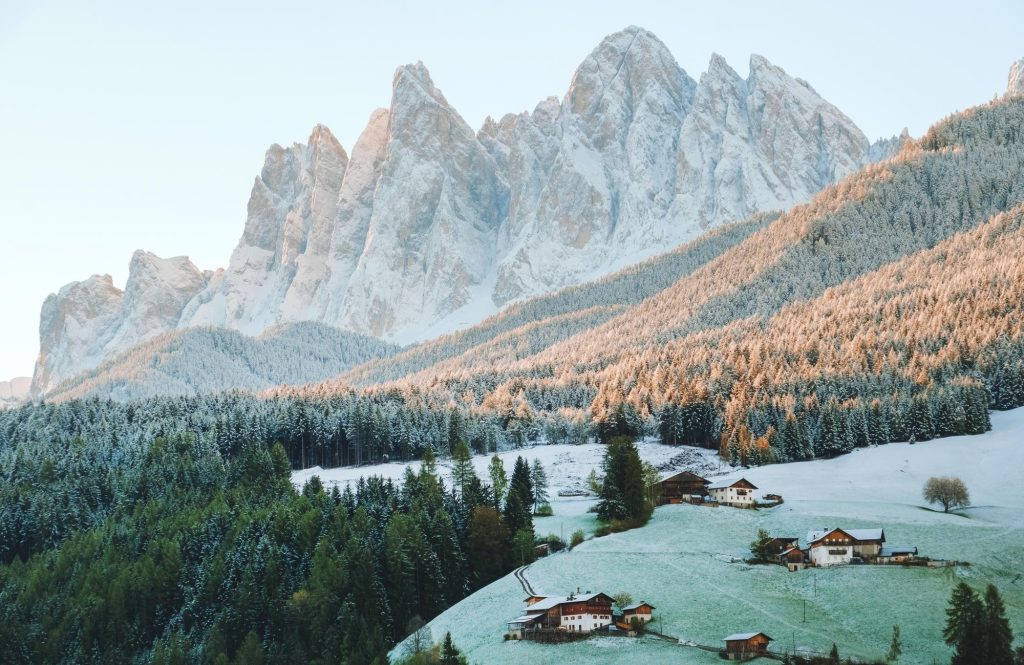
Geological Structure
The Alps were formed as a result of complex geological processes that occurred over millions of years:
Age of formation: approximately 65 million years ago during Alpine orogeny
Structure: fold-and-thrust, formed as a result of the collision of the African and Eurasian tectonic plates
Rock composition: crystalline rocks in the central part, sedimentary rocks at the edges
Highest Peaks
The Alps are famous for their impressive peaks, among which are:
Mont Blanc: 4,810 m – the highest point of the Alps and Western Europe
Monte Rosa: 4,634 m – the second highest mountain massif of the Alps
Matterhorn: 4,478 m – one of the most recognizable peaks in the world
Jungfrau: 4,158 m – famous peak in the Bernese Alps
Climatic Conditions
The climate of the Alps is characterized by great diversity and depends on several factors. The Alpine ridge serves as an important climatic divide in Europe, separating the northern temperate climate zones from the southern Mediterranean ones.
Elevation zones: temperature decreases on average by 0.6°C every 100 m of elevation
Slope differences:
- Northern slopes: more humid and cool
- Southern slopes: warmer and drier
Seasonality:
- Winter: abundant snowfall, temperatures down to -15°C and below
- Summer: average temperature is 14°C, frequent rains
Up to 800 m, the climate is moderately warm; territories with moderate climate extend across the north and west of the Alpine region.
Glaciers and Lakes
The water system of the Alps includes many natural features:
Glaciers
- Number: more than 1,800 glacial formations
- Largest: Aletsch Glacier (23 km long), Gorner Glacier (14 km long), Mer de Glace (12 km long)
- Significance: natural freshwater reserves, sources of major rivers including the Rhine
Lakes
- Largest: Lake Geneva, Lake Constance, Lake Como
- Origin: most have glacial origin
- Significance: regulate the water regime of the region, important for tourism and economy
Flora and Fauna
The Alps have rich biodiversity, including approximately 30,000 species of animals and plants. Alpine vegetation changes with altitude:
Up to 2,000 m: coniferous forests and mountain meadows
2,000–3,000 m: Alpine meadows with characteristic plants. Among unique representatives of high-altitude flora, the rare flower – the Glacier Buttercup – is particularly notable, growing at altitudes above 2,500 m.
Above 3,000 m: specialized high-altitude flora
The natural features of the Alps create a unique ecosystem that supports rich biodiversity and plays an important role in Europe's climate system. For comparison, the Carpathian Mountains, located further east, have a less pronounced Alpine relief character. However, global warming has a significant impact on Alpine glaciers, which are gradually shrinking.
Alpine Regions
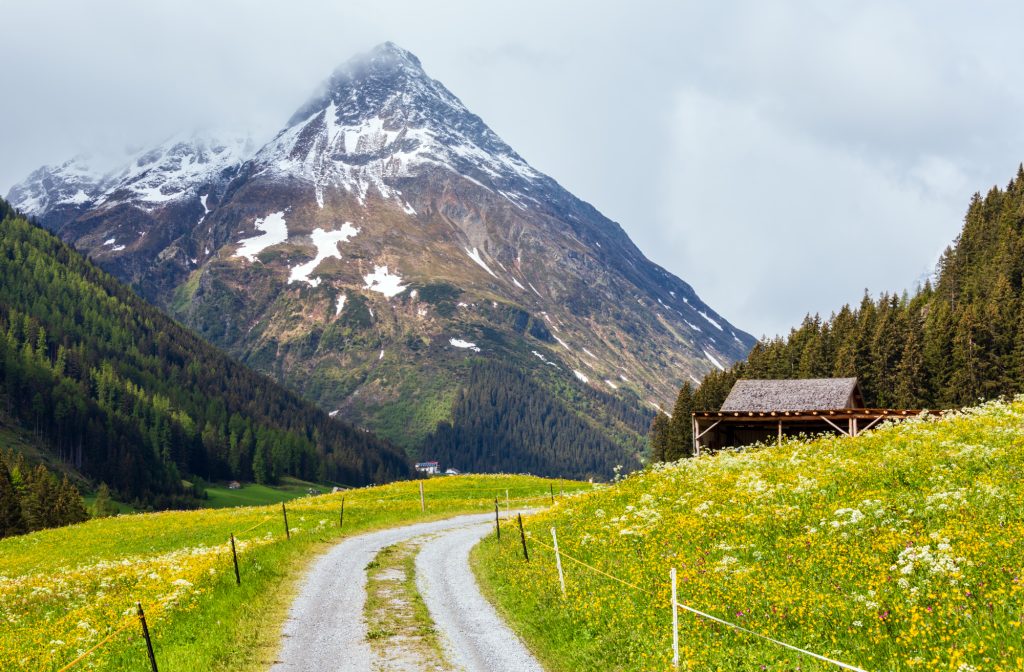
Main Regions
The Alpine mountain system is traditionally divided into several major regions, each with its own unique characteristics:
French Alps
Located in eastern France and include:
Savoy Alps:
- Mont Blanc massif on the border of France and Italy
- Chamonix Valley
- Famous ski resorts (Val d'Isère, Courchevel)
Dauphiné:
- Écrins National Park
- Pelvoux Massif
Swiss Alps
Occupy the central part of the mountain system:
Bernese Alps:
- Jungfrau-Aletsch region
- Grindelwald
Pennine Alps:
- Zermatt region
- Matterhorn
Italian Alps
Extended along Italy's northern border:
Dolomites:
- Unique rock formations
- Cortina d'Ampezzo – famous Italian ski resort
South Tyrol:
- Bolzano
- Merano
Austrian Alps
Located in the western and central part of Austria:
Tyrolean Alps:
- Innsbruck – site of the Winter Olympics
- Kitzbühel
Salzburg Alps:
- High Tauern massif
- Zell am See
Tourism and Sports
The Alpine region is an important tourist destination year-round and attracts visitors from around the world:
Winter tourism:
- Alpine skiing with diverse slopes
- Mountaineering for experienced climbers
- Skiing on Alpine slopes
Summer tourism:
- Hiking through Alpine meadows
- Mountaineering to conquer peaks above 3,000 m
- Ecotourism in mountain regions
Famous Sites and Attractions
Each Alpine region has its own unique natural and cultural attractions:
Natural attractions:
- Aletsch Glacier in Switzerland (260 km in extent)
- Lake Como in Italy
- Grossglockner in Austria
- Chamonix Valley in France
Cultural attractions:
- Neuschwanstein Castle in Germany
- Grand-Saint-Bernard Monastery in Switzerland
- Old Town Innsbruck in Austria
- Alpine villages of the Dolomites in Italy
Economic Importance
The Alpine region plays an important role in the economy of European countries:
- Agriculture: local residents engage in agriculture, including livestock raising and cheese production
- Tourism: approximately 150 million tourists visit Alpine regions annually
- Hydropower: mountain rivers are used for electricity generation
- Transportation: important transport routes through Alpine passes
Each Alpine region preserves its own cultural traditions, architectural features, and gastronomic heritage, which makes traveling through the Alps particularly diverse and interesting. At the same time, all regions are united by a common Alpine culture and the traditions of mountain peoples.